Comparative Theology — Topic 13. The Methodism.
- The history of the emergence of Methodism
- The development of Methodism and its spread around the world
- The doctrinal principles of Methodism
- The liturgical practice of Methodists
- Organization structure and internal church discipline
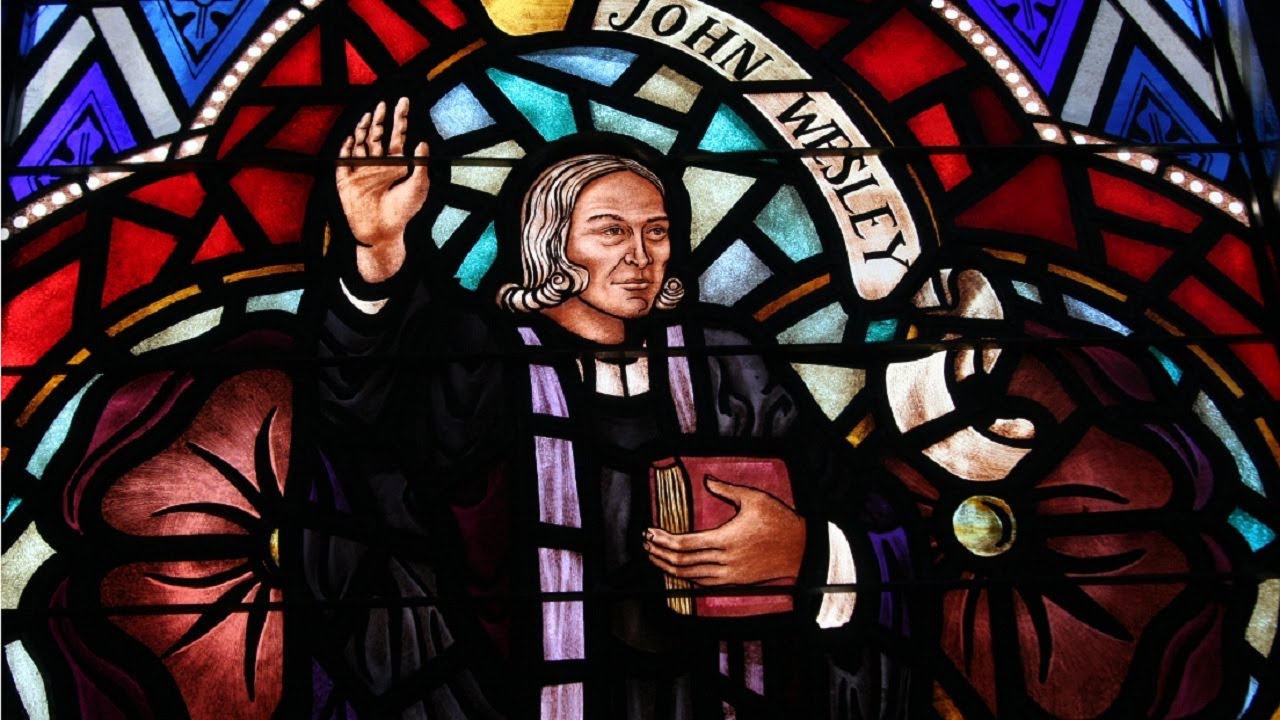
Methodism, as a Protestant denomination, preaches the priesthood of all believers. At the heart of this doctrine is the denial of the division of the church into laity and clergy. Every believer is able to worship, confess, and administer the sacraments. The clergy appointed to serve the Church, not being a special class, play the role of preachers and mentors. All ministers have equal rights and powers, and they differ from other believers only in their position or official duties, and not in the gifts of grace bestowed from above. The laity play an important role in the church leadership, being represented in almost equal numbers with the clergy in every body, committee and conference. After some preparation, lay people are allowed to preach, conduct divine services, and perform the sacraments. Women can be elected to any ministry, including becoming priests.
The Methodist church organization is based on an association of believers or a community. Congregations are organized into districts, served and headed by a single priest, called a superintendent (in non-episcopal churches), or bishop (in episcopal churches). Communities are made up of groups of believers called “society” or “class.” The society usually consists of 12-20 people. Weekly meetings of its members are held under the guidance of the senior in the class for pastoral care and spiritual guidance. The group meets regularly to pray, listen to sermons, share spiritual experiences, and discuss the spiritual state of each participant over the past week. The meeting of the leaders of the “class” forms the community council. In Methodism, it is obligatory for all believers to participate in weekly church meetings and in the life of the church in general.
Social service is the core and key to understanding the development of each Methodist community. The main task of a Methodist’s life is the realization of the principles of Christian morality in personal experience, and their entire organization is adapted to help its members in this. The Methodist priesthood comes in two grades: deacons and presbyters. A deacon has the right to bless marriages, perform the sacrament of Baptism, and assist during the sacrament of the Eucharist. The elders are called to administer the sacraments, preach the gospel, and provide spiritual nourishment to the flock. The presbytery is the highest in the church. District presbyters or superintendents are elected to carry out administrative work in a certain district. The district elders make up the bishop’s “office” (where there is one). A bishop or senior presbyter (in non-episcopal churches) is not considered a special rank and is simply the third degree of the priesthood.
Methodist churches are currently run by conferences. The highest governing body is an annual conference that unites individual communities within a certain geographical region. Each church has a council composed of lay people. In the United States, annual conferences are organized into a territorial conference that elects and appoints bishops and members of the church board. In other countries, these functions are assumed by central conferences, which determine the degree of their autonomy.
The highest legislative authority for Methodists is the General Conference, the authorized body responsible for all matters of doctrine and secular activities, and which ensures the governance of churches. Laypeople and clergymen are equally represented at conferences at any level. The Judicial Council is the highest authority in the field of church law.
Methodists have always actively cooperated with other churches, and Methodist J. Mott is considered one of the founders of the ecumenical movement. The Permanent Commission on Ecumenical Affairs conducts negotiations with other denominations on issues of mutual cooperation. Almost all Methodist churches are members of the World Methodist Council, established in 1881 and headquartered in Lake Junalaska, Northern California, USA. The World Methodist Council convenes World Methodist Conferences once every 10 years.
As of 2005, there are approximately 75 million Methodists in more than 130 countries, most of whom live in the United States, where at the beginning of the XIX century. They were the largest religious group, and today they are second in number only to Baptists and Catholics. In 1992, the Russian United Methodist Church (RUMC) was formed on the basis of several officially registered communities. The RUMC has about 100 communities in the CIS countries, about 70 of them are located in Russia, the rest in Kazakhstan, Belarus, Kyrgyzstan, Moldova and Ukraine.
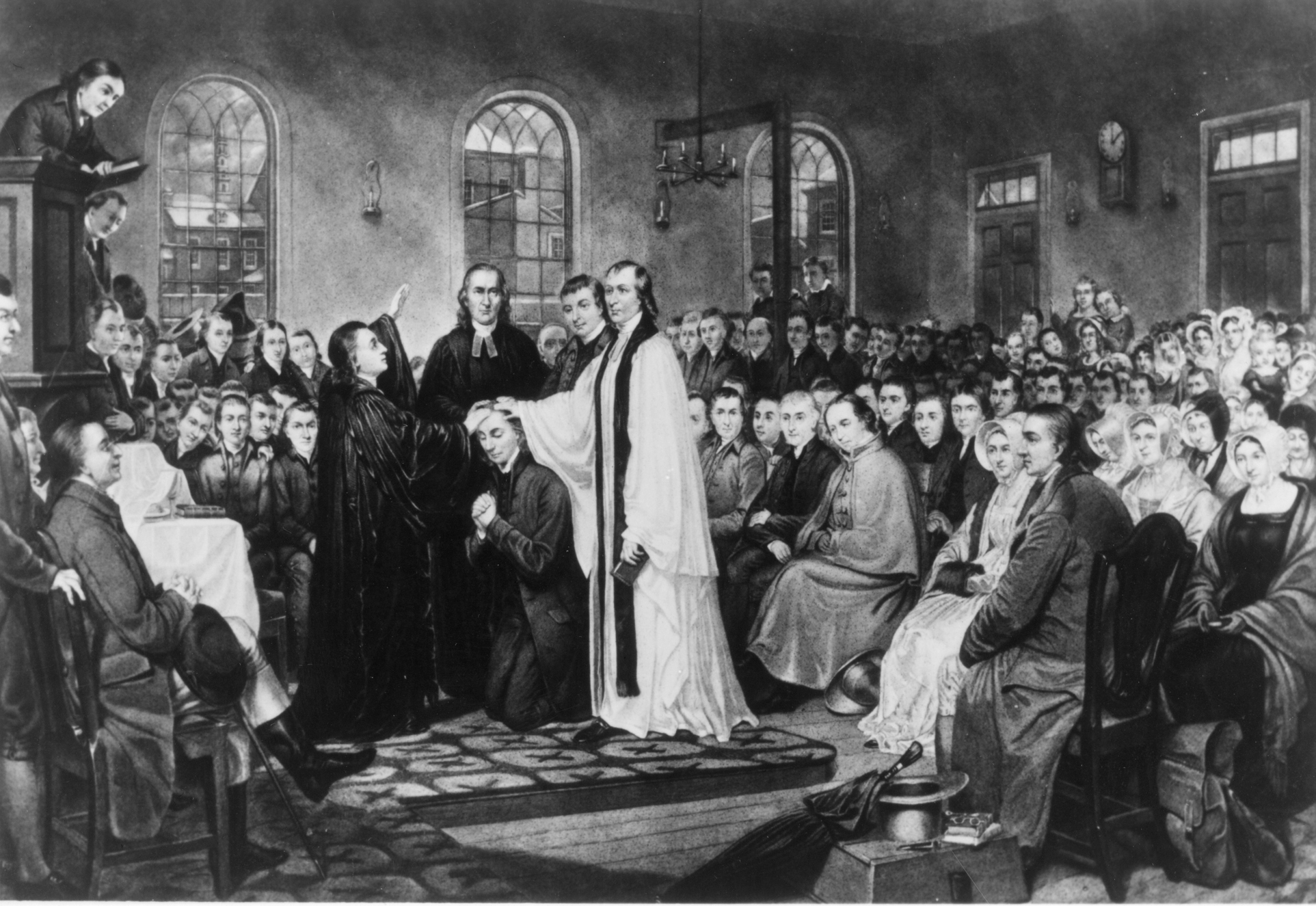
The first Methodist congregations were initially organized by J. Wesley, along with J. Whitefield in Bristol (1739), and then J. Wesley established them in London (1740) and Newcastle (1742). From these centers, since the middle of the 18th century, the movement has spread to small towns and rural areas. It was assumed that members of these societies would take part in the breaking of bread in the Anglican Church, since their preachers were not ordained. J. Wesley was aware of the need to preserve the priesthood and insisted on obtaining priests from the Church of England to administer the sacraments. The Anglican bishops resolutely refused to ordain ministers in Methodist societies and did not want to consecrate their houses of worship. After it was refused to ordain pastors for Methodists in America, J. Wesley decided to ordain one of his followers himself as a “superintendent” with the rights of a bishop. The Methodist priesthood originates from here. This led to a significant liberalization of the church.
J. Wesley developed the Circuit system, which allowed itinerant priests to preach in the most remote corners of Great Britain. It also created a permanent rotation of clergymen. Every 5 years, a Methodist minister was required to move to another congregation, often dozens of miles away. It was a big innovation to change the parish, as Anglican priests could serve in one place all their lives.
In 1744, J. Wesley called his followers to the first annual conference, where it was decided that Methodist ministers should get up at 4 a.m., preach every morning and evening, not be ashamed of any work, keep a journal of their activities, pay special attention to children and schools, be tactful in dealing with women, avoid useless waste of time, frivolous entertainment, extravagance and drunkenness. At the conference, Luther’s thesis on “justification by faith” was developed, but the need for good works to maintain faith was emphasized. The doctrine of the universal sinfulness of people was softened, and Calvin’s position on unconditional predestination was practically refuted. It was argued that although man had fallen away from his original perfection during the fall, having lost righteousness, he had not lost the image of God in himself, having retained reason and freedom of choice, therefore he was able to achieve a “second birth” as a result of a long struggle with his sinful inclinations.
At the same conference, the issue of relations with the Anglican Church was also discussed, and it was confirmed to continue communication with it. The Wesley brothers and most of their followers were faithful to this decision until the end of their lives. The names of both brothers are carved on a plaque in Westminster Abbey, as they were ordained priests of the Church of England and always opposed the separation of the Methodist movement from the Anglican Church.
The Methodist Episcopal Church was first established in Baltimore in 1784 as an independent denomination in America. And only in 1795, after the death of J. Wesley, authorities in England recognized the existence of the independent religious organization of Methodists, which finally separated from the Church of England. The Methodist movement spread rapidly in England: in 1788 their number reached 78 thousand people, in 1821 - about 215 thousand, in 1861 - 513 thousand, and in 1906 - about 800 thousand church members. Rapid growth was also observed in Ireland, and to a lesser extent in Wales and Scotland. There has been a Methodist Missionary Society since 1813. Methodist communities are emerging in all the colonial possessions of Great Britain. In the American colonies, Methodist worship services began in 1766. In 1812, there were 190,000 American Methodists, by 1844 their number had increased to 1 million people, and by 1899 exceeded 4 million.
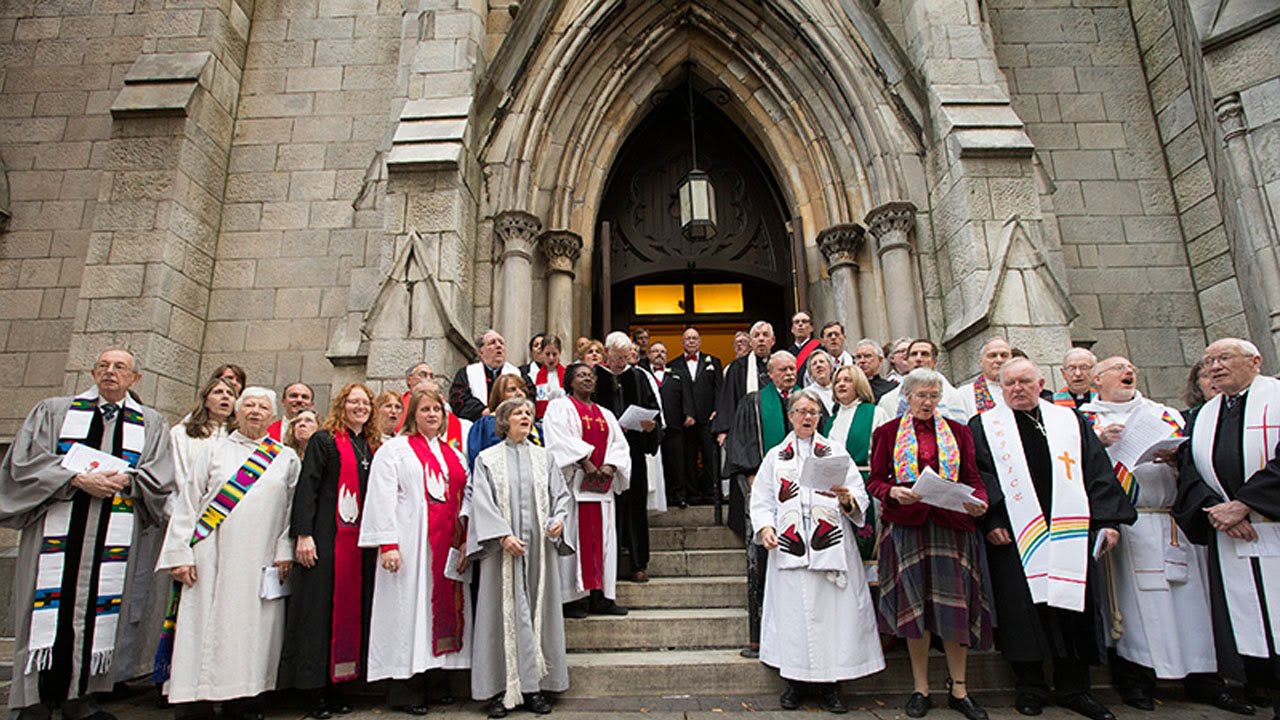
Dogmatically, Methodism is close to Anglicanism, but Methodists do not attach much importance to theological discussions, believing that differing opinions on doctrinal issues, if they do not go beyond the Christian faith, have a right to exist. They allow a free interpretation of dogmatic positions, welcome the multiplicity of personal views, and emphasize that the core of religion should be a personal relationship with God. Methodists profess the traditional Christian teaching of the Holy Trinity, the God-manhood of Jesus Christ, and see the Bible as the highest authority in matters of faith and practical life.
Without seeking to participate in theological disputes, Methodists focus on achieving Christian perfection and asserting confidence in personal salvation. They recognize the reality of sin and the possibility of forgiveness and redemption, and believe that salvation comes through faith, recognizing the need for good deeds. Conversion (salvation by faith) must necessarily be followed by “sanctification.” As Wesley pointed out, Christians can become perfect through grace and receive “sanctification” in their earthly lives. This sanctification should be the culmination of a believer’s existence. But in order to get it, you need to apply vigorous efforts, rebuild your life, doing it methodically, constantly and scrupulously.
J. Wesley argued that all people receive the gift of grace at birth, allowing them to respond to God’s call and embark on the path of salvation. Through faith, repentance and holiness, a person can grow in grace, striving for rebirth and Christian perfection. He called this lifelong process Sanctification, without identifying it with sinlessness. In the 70s of the XVIII century. Wesley studied Eastern Orthodoxy, in particular, the doctrine of deification, which influenced the development of his doctrine of sanctification. He formulated the concept of sanctification in detail: a believer who is constantly growing in the Spirit can achieve perfect sanctification by constantly purifying himself from his sins; those who have achieved the highest degree of sanctification, “regenerated”, no longer commit intentional sins.
J. Wesley categorically denied Calvin’s doctrine of predestination and adhered to the ideas of Arminianism: faith and unbelief are the subject of choice of conscience, salvation belongs to all mankind, a person can resist grace or lose it. Most modern Methodists share the concept of free will granted by the sanctifying grace of the Lord, believing that all people can be saved, and they are able to realize the fact of their salvation.
The following works are considered to be the doctrinal foundations of Methodism. Wesley: “Standard Sermons” (44 sermons from the period 1746-1760 with an exposition of his doctrinal ideas), “Explanatory Notes to the New Testament” (1755 with an exposition of his position on the Gospel with evidence of his commitment to Arminian doctrine) and “25 articles of religion”. The latter work was prepared by him for American co-religionists and was first presented at the conference of the newly established Methodist Episcopal Church in 1784. J. Wesley proposed 24 articles, and the conference added another one to them. This treatise is a slightly modified “39 articles of the Anglican Confession.” Set out in the form of 25 statements, the provisions of Methodism do not differ significantly from the Anglican ones, being in fact an abbreviated version of them made by J. Wesley. The cuts concerned simplifying the wording and removing Calvinist and Catholic elements from the Anglican document. It is characteristic that the “25 articles of religion” have remained unchanged throughout the history of the main Methodist churches.
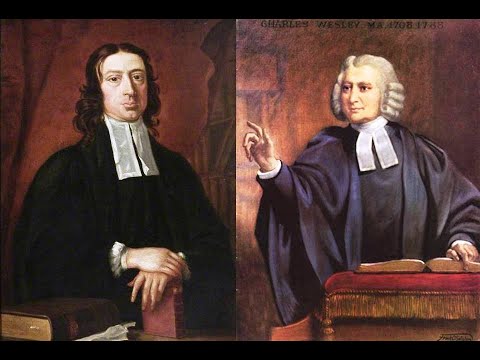
Methodism is a denomination that arose within Anglicanism due to the pastoral and preaching activities of the Wesley brothers John (1703-1791) and Charles (1707-1788). In 1791, the “Methodists”, so named for their desire to methodically fulfill the commandments of Christ, became a separate denomination, breaking with Anglicanism. Currently, about 75 million people worldwide are Methodists.
In 1727, Charles, the youngest of the Wesley brothers, formed a group of fellow students at Oxford University who wanted to live according to the Gospel: in fasting, prayer, and strict observance of Christian principles. In November 1729, his elder brother John joined them, he had received priestly ordination a year earlier and soon became a recognized leader of the circle. The members of the student union fasted on Wednesdays and Fridays, and gathered together every week for joint prayer and Bible study. They regularly visited the sick and prisoners, taught orphans to read, and provided food for several poor families. The band was given the nickname of the “Holy Club”. First of all, for its persistent attempts to put biblical postulates into practice. Then the members of the club began to be called “Methodists” for punctual attendance at all church services, full and accurate observance of the gospel commandments. Interpreting this nickname in his own way, J. Wesley gave it the following definition: “A Methodist is someone who lives according to the method established in the Bible”; methodism is “the religion of the heart.” In 1735, the club disbanded when the Wesley brothers left Oxford, but the Methodist Church subsequently grew out of this small circle.
On October 14, 1735, the brothers John and Charles Wesley traveled to America as members of a missionary society to work among the Indians in Georgia at the request of Governor James Oglethorpe, but the unfavorable situation in the colony prevented them from engaging in proper missionary work. General Oglethorpe found use for John Wesley as a pastor for the English colonists. But the strict views typical of the “high” Anglican Church irritated the local parishioners. In early 1738, both brothers returned home to England.
Back in Georgia, J. Wesley first became acquainted with the Herrnhut Brotherhood and soon began to listen to their sermons, inspired by their lively and lucid approach to worship. After returning to London, the brothers began attending the services of the Moravian Brothers on Aldersgate Street, and there, during their service, John experienced a spiritual shock that became a turning point in his life. On May 24, 1738, J. Wesley joined the service of the Moravian brothers. There he felt a strange warmth in his heart, felt confident that Christ had absolved him of all sins. He remembered this moment when all doubts disappeared, giving way to the unshakeable confidence and religious enthusiasm with which he has since begun to preach the Gospel. His brother Charles had experienced a similar religious experience three days earlier, on May 21, 1738. Their closest associate George Whitefield (1714-1770) also went through a similar religious experience.
J. Whitefield was a classmate of both brothers at the university and a member of their student club. In 1738, he traveled to North America to establish an orphanage in Georgia. Then he often returned to the American colonies, where he was known as an outstanding itinerant preacher who gathered up to 8,000 listeners a day in New England. Whitefield was known for his unorthodox views and creative approach to business. Traveling around England, he was the first Methodist to preach in the open air, attracting thousands of people, which led to a significant popularity of the teaching. He influenced J. Wesley in this. In 1739, he accepted Whitefield’s invitation to preach in Bristol to the miners in the field. Thus began the preaching ministry of J. Wesley outside of the temple. Their first speeches about spiritual rebirth aroused very strong emotions in the audience and were often accompanied by fainting spells and even religious ecstasy.
The Anglican Church began to obstruct the new movement by closing the doors of many of its churches to its preachers. Then the Methodists turned to preaching the Gospel to the poor: they visited industrial centers and mining villages, created religious missions and schools for children in working-class neighborhoods, visited inmates in prisons, etc. This socially oriented activity of the Methodists led to their incredible popularity among the broad masses of the people. The majority of the movement’s activists were not clergymen. Wesley allowed charismatic leaders from the congregation to deliver sermons during the service. The first lay Methodist preacher was T. Maxfield (c. 1720-1785). Women were also allowed to preach.
Wesley began to actively involve the laity in solving organizational issues within the church communities. Without separating themselves from the Church of England, the Methodists formed religious cells or societies within it. The groups he created were conceived not as a replacement for the structures of the Anglican Church, but as their complement. Each Methodist, being a member of the local community, was required to participate in “class meetings.” These small “societies” or “classes” consisted of a dozen neighbors who gathered weekly to pray together, glorify God, and provide mutual religious education. Lay preachers were trained in the societies and strict discipline was maintained. It was prescribed to arrive there exactly at the appointed hour and begin the meeting by singing a hymn and reciting a prayer. At the weekly class meetings, everyone talked about their experiences and needs, and instructions were given to help those in need. The Methodists confessed their sins to each other, and engaged in religious and charitable activities.
Methodism emerged from the bosom of Anglicanism as a desire to embody the principles of Christian morality in everyday life, and its founders were not at all eager to create a new sect and did not seek to reform the creed and rituals of the dominant Christian denomination in the country. The main emphasis was on the evangelization of the cult, on the personal achievement of spiritual purity and the development of missionary activity. A distinctive feature of the movement of this group of enthusiasts was a serious attitude to the commandments of the New Testament and the skillful organization of believers for Christian work. The Methodists followed strict rules of daily behavior: do not buy, do not sell on Sunday, do not try a sip of any kind of alcohol unless prescribed by a doctor. They were supposed to “give alms and be a model of diligence and moderation.” They were not allowed to wear jewelry: rings, earrings, necklaces, etc. They fought against gambling and other immoral habits. They were instructed to “be at the altar in the church every week and attend every group meeting, unless hindered by distance, business or illness, and pray every day in person and with their family.” In addition to spending as much time as possible reading and reflecting on Scripture, they were required to observe “all Fridays of the year” as “days of fasting or abstinence.” The sermons of J. Wesley also included a broad social agenda: for example, he called for the medical examination of the population, the organization of savings banks. In addition, he published essays on folk medicine, called for prison reform, and waged an energetic struggle for the abolition of slavery.
Of the Wesley brothers, Charles had a greater preaching gift than his brother, but was inferior to him in health and organizational skills, so John is recognized as the founder and central figure of Methodism. Becoming an itinerant preacher of piety, during his life he rode 362 thousand km in the saddle (for this he was called the “horseman of God”), which is equal to 10 trips around the world and delivered about 40 thousand sermons, many of which were printed and distributed among the people, wrote about 200 books. Charles Wesley, being literarily gifted, is known as the author of popular hymns. He composed them during his lifetime approx. 6 thousand, which gave birth to the expression “Methodism was born in songs.” The parishioners were presented with the basic principles of evangelical life in an accessible song form, including church doctrines that were quite difficult to understand, for example, the dogma of the Trinity. The most eloquent Methodist preacher was J. P. Morgan. Whitefield has devoted his entire adult life to public preaching: he delivered 15,000 sermons during his 35-year ministry. Although he adhered to the doctrine of predestination and objected to free will, speaking of the elective power of God and the pre-established atonement, this did not prevent him from being the closest associate of J. P. Morgan. Wesley’s role in spreading Methodism among Anglicans.
The Methodist cult practice is close to the Anglican one: worship services take place on Sundays (morning and evening), sermons are preached and hymns are sung, but Methodism has more freedom in choosing prayers and there are differences in services. There is a book of worship services and a collection of songs, where about 150 texts belong to C. Wesley. Communities use different liturgical forms, from the “high forms” inherited from the Church of England to simple Protestant worship without liturgical rites. During divine services, the Apostolic Creed is usually mentioned, and the Nicene-Constantinople Creed is also recognized. A number of churches use more recent symbols for certain purposes, for example, the Social Symbol adopted by the General Conference of the Methodist Episcopal Church in 1908 in the USA.
Two sacraments are recognized: Baptism and the Eucharist (the Lord’s Supper). Baptism is usually performed by sprinkling, but it can also be performed through pouring (immersion). Both infants and adults can be baptised by Methodists. Baptised children are not counted by church statistics as full members of the church. The Eucharist is a sacrament that testifies to the death of Christ and indicates the love that Christians should have among themselves. Methodist pastors give advice to their believers during conversations when they reveal their sins to them, but they do not assume the right to absolve sins, believing that everyone can turn directly to God.
Without defining how transubstantiation takes place, Methodists believe that they accept with faith “the Body and Blood of Christ, Who gives atonement in Holy Communion,” i.e., the Methodist Church recognizes the true presence of Christ in the elements of communion, without specifying how this presence is specifically expressed. During communion, wine is often replaced with the juice of black currants or red grapes, as Methodists strictly follow a sober lifestyle.
There are rites of marriage, funerals, and church membership, but they are not considered sacraments; there is a ritual of approval for missionary work. The order of worship is recommended, but not prescribed, by the Book of Worship adopted at the General Conference. The celebration of the sacraments, the ritual of ordination to the priesthood, wedding and funeral ceremonies are similar to those of the Anglican church, but Methodism is characterized by great simplicity and the active participation of lay people in divine services along with priests.
Related Concepts
- 25-articles-of-religion
- abolition-of-hierarchy
- anglican-dialogue
- anglican-liturgy
- annual-conference
- apostolic-creed
- baptism
- bible-authority
- calvinism
- catechesis
- charles-wesley
- church-governance
- church-membership
- church-organization
- class-meeting
- clergy
- communion
- community-council
- conversion
- creeds
- death-and-resurrection
- discipline
- ecumenism
- episcopacy
- episcopal-and-non-episcopal-churches
- explanatory-notes-to-the-new-testament
- general-conference
- god-manhood
- good-works
- great-catechism
- holy-club
- infant-baptism
- initiation
- interconfessional-dialogue
- judicial-council
- laity
- lay-leadership
- lay-preaching
- liturgical-system
- lords-supper
- methodism-born-in-songs
- mission
- new-birth
- nicene-constantinople-creed
- non-chalcedonian-dialogue
- pastoral-care
- personal-religion
- preaching
- real-presence
- roman-catholic-relations
- sacraments
- social-ethics
- social-gospel
- standard-sermons
- superintendent
- universal-salvation
- world-council-of-churches
- world-methodist-conferences
- world-methodist-council