Comparative Theology — Topic 12. The Reformation in England.
Wishing to eradicate religious differences, already in the early years of her reign, Elizabeth instructed Cranmer to review the “42 articles” written by Cranmer and draw up a new corrected confession of faith based on them. By 1563, Cranmer’s “42 articles” had been edited and published in Latin under the title “38 Articles.” The final edition of the 42 Articles followed in 1571. The document of 1571 was published in English and was called “39 articles”. To this day, the 39 Articles remain the main doctrinal document of the Church of England. Its key provisions can be systematized as follows.
Anglicanism “adheres to the doctrine of the Holy Trinity”, professing the belief that “in God Alone, three Persons of one Being are equal and eternal: the Father, the Son and the Holy Spirit” (Article 1). Following the Catholic tradition, Anglicanism asserts that “The Holy Spirit, proceeding from the Father and the Son, is Consubstantial with the Father and the Son” (article 5). Thus, the descent of the Holy Spirit “and from the Son” (Filioque) is recognized
Claiming that “the Holy Scriptures contain everything necessary for salvation,” Anglicanism accepts the principle of sola Scriptura (article 6). All 27 books of the New Testament and 38 books of the Old Testament are recognized as “canonical”. The “semi-canonical status” is accepted, that is, the edifying, but not the doctrinal meaning, of the 14 Old Testament apocrypha (Article 6). It is emphasized that “The Old Testament does not contradict the New” (article 7). Anglicans recognize the doctrinal authority of three Creeds
- the Apostolic, Athanasian, and Nicene–Constantinople Creeds - because “they can be confirmed by the strongest evidence from Holy Scripture” (Article 8). They call the Nicene–Constantinople Creed the Nicene Creed and include the Filioque in it.
In the polemic against Pelagianism, original sin is defined as “a defect and damage to the nature of every human being” (article 9). This damage to human nature is so profound that “without the grace of God, which arouses in us a good desire and helps us, we cannot do good deeds pleasing and pleasing to God” (Article 10). The 39 articles contain an indication close to Calvinistic theology that as a result of the fall, “with our natural powers through good deeds, a ” man ” cannot convert and prepare himself for faith and invocation of God” (article 10) . There was no such indication in the “42 articles”. In turn, the “39 articles” did not preserve the thesis of the “42 articles” that the grace of Christ “does not force the will” of man. The Anglican doctrine of salvation is based on the Lutheran principle of justification by “faith alone” (sola fide) in the Calvary sacrifice of Christ. According to this principle, “we are justified before God only by the merits of Jesus Christ through faith, and not by our good deeds or merits” (article 11).
According to Anglican teaching, salvation is not acquired by good deeds. Good deeds “come from true and living faith,” are “the fruit of faith,” and “follow justification.” Nevertheless, good deeds must be performed, because, proceeding from faith, they testify to its truth, and by them “living faith can clearly be recognized” (article 12). At the same time, deeds committed before justification are declared “not pleasing to God” and even having “only a sinful nature,” since they “do not originate from faith in Christ and do not make a person capable of receiving grace” (article 13). Here we can trace the influence of Calvin’s ideas, who argued that the deeds committed by non- believers “deserve to be called not so much virtues as vices,” since their seemingly good deeds, which are not aimed at glorifying God, “by their intentions” (are only) “sin.”
Along with the deeds committed before justification, the so-called “excessive deeds” are also condemned, that is, deeds that “exceed the commandments of God.” Such deeds amount to “impiety” because they assume that “people do not only what they have to do before God, but also do even more than what is required of them” (article 14). Here, the “39 articles” polemicize with the Catholic doctrine of indulgences, confirmed on November 9, 1518 by Pope Leo X in the decree “Cum Postquam”. The 39 articles also directly criticize indulgences and other components of Catholic practice: “The Roman doctrine of purgatory, indulgences, worship and veneration of both icons and relics, as well as the invocation of saints, is an invention and is not based on the testimony of Scripture, but rather contradicts the Word of God” (Article 22).
Anglicanism shares the doctrine of predestination, which dates back to Calvinism, according to which God, even before the creation of the world, expressed His intention to save those “chosen” by Him for salvation: “Predestination to life is the eternal will of God, according to which God (before the foundation of the universe), in His advice, hidden to us, forever determined to deliver people from the curse and condemnation, those whom He has chosen through faith in Christ and, as vessels of honor, to lead them through Christ to eternal salvation.” Those who are predestined to life “become children of God through adoption” and “receive eternal bliss by the grace of God.” At the same time, people who do not have the spirit of Christ in them “are led by the devil to despair or into the abyss of the most impure life” (article 17). The “39 articles” did not preserve the reference of the “42 articles” to the fact that “the judgments of predestination are not known to us.” Thus, the “39 articles” speak more clearly about predestination.
At the level of official doctrinal texts, Anglican theology has not presented a detailed and systematic teaching about the Church, focusing on its visible incarnation on earth in the “assembly of believers”: “The visible Church of Christ is a congregation of believers in which the true Word of God is preached and, in accordance with the commandment of God, the sacraments are performed.” Unlike the 42 Articles, the 39 Articles, although very briefly– address the justification of the ceremonial and doctrinal authority of the Church, indicating that it has the power to “establish rituals and worship” and “has authority on controversial points of faith” (article 20). Despite the fact that the Church is declared to be “the witness and guardian of the Holy Scriptures,” it “cannot legitimize anything that is contrary to the written word of God” (Article 20), while Ecumenical councils “can and have erred in matters of faith.” Thus, the authority of the sola Scriptura principle is proclaimed above the authority of the Church.
While affirming the priority of Holy Scripture in relation to the dogmatic tradition of the Church, Anglicanism, nevertheless, “does not completely deny the authority of Tradition, but restricts it to the first 5 centuries of Christianity and the decisions of the first 4 Ecumenical Councils.” In general, “the doctrine of Sacred Tradition as such is not contained in the Thirty-Nine Articles, however, article 34 refers to the “traditions of the Church,” which include various liturgical customs, but the main criterion for their correctness is “not contradicting the Word of God.” According to article 35, the first “Book of Homilies” of 1547 and the second “Book of Homilies” published subsequently in 1571 contain “true and saving teaching.” Thus, both “Books of Homilies” have a special doctrinal significance for the Church of England.
The 24th article asserts the fundamental principle of the Anglican faith – “the necessity of preaching and performing the sacraments in the national language.” The 39 articles, as well as the 42 articles, recognize only two sacraments as established by Christ – Baptism and the Eucharist (called the Lord’s Supper) – as “valid signs of God’s grace and favor” (Article 25). Being baptized is necessary in order to become a “member” of the Church of England. Baptism visibly confirms the “promise of the forgiveness of sins” (article 27). Like Lutheranism, the Anglican tradition has preserved infant baptism. Baptism is possible both in adulthood and in infancy.
The Eucharist is called “the sacrament of our redemption through the death of Christ,” therefore, “for those who sincerely, worthily and with faith receive it, the bread that is broken is communion of the Body of Christ, just as the cup of blessing is communion of the Blood of Christ” (Article 28). “39 articles” – as well as “42 articles” – They reject the doctrine of transubstantiation, claiming that it “cannot be proved by Holy Scripture” (article 28). At the same time, the “39 articles” included an indication of the “spiritual” communion of the body and blood of Christ, which was absent from the “42 articles”: “The body of Christ is taught, accepted and eaten in the Eucharist only in a heavenly spiritual way, and the means by which the body of Christ is accepted and eaten in the Eucharist is faith” (article 28) . All Anglicans – not only clergymen, but also lay people – receive communion under two types (bread and wine): both parts of the Sacrament of the Eucharist “must be taught to all Christians” (Article 30).
Anglicanism “rejects the concept of the Eucharist as a redemptive sacrifice renewed during the liturgy.” According to Anglican teaching, the Calvary atonement of Christ is a Sacrifice “once offered” – “both for original sin and for derivatives, and there is no other satisfaction for sin than that one” (Article 31). The remaining 5 sacraments, according to Anglican teaching, are not considered “evangelical” and divinely ordained because they “have no visible sign or sacrament commanded by God” (Article 25).
Although the priesthood does not have the status of a sacrament in Anglicanism, Anglicans not only do not consider their ministers to be simply administrators of parish or diocesan life, but they believe that Anglican clergy are the successors of the apostles and, accordingly, possess the grace of ministry. Moreover, at the beginning of the reign of Elizabeth I, everything was done to show and ensure the connection of the Anglican episcopate with the ancient Church. In this context, it is necessary to understand the circumstances of the first Archbishop of Canterbury in the “Elizabethan” times, Matthew Parker (1504-1575), whom Anglicans consider to be the founder of their hierarchy.
Parker’s ordination took place on December 17, 1559 and allowed him, from the point of view of Anglican theologians, to unite the blessed succession of the Catholic and Anglican episcopates. This was made possible by the fact that two of the four ordainers (Barlow and Hodgkins) were at one time ordained according to the Catholic rite, and, in the opinion of the Anglicans, had apostolic succession from Rome. The other two (Scorey and Coverdale) were ordained according to the new Anglican order, but by Archbishop Thomas Cranmer, who in turn was also ordained bishop before the separation of the Church of England from Rome in 1534.
The Anglican perception of Parker’s ordination is set forth in the epistle “Saepius Officio”, written in 1897 by Frederick Temple, Archbishop of Canterbury, and William McLagan, Archbishop of York. The “Saepius Officio” was a response to Pope Leo XIII’s encyclical Apostolicae curae (1896), which annulled Parker’s ordination and all subsequent Anglican ordinations (Anglican clergy are accepted into communion with the Roman Catholic Church as lay people).
The Orthodox perception of Matthew Parker’s ordination goes beyond the ceremonial and canonical sphere and is based on the theological understanding of the sacrament of the priesthood in the Anglican Church. The Archbishop Vasily (Krivoshein) in his report “The Theological dialogue between the Orthodox Church and the Anglican Denomination and its problems” points out the following: “The purely historical existence of the apostolic succession is beyond any doubt, and the episcopal ordination of Archbishop Parker, the founder of the Anglican hierarchy, can be considered a historical fact. It should be clarified that in the eyes of the Orthodox Church, the fact of the preservation of apostolic succession is insufficient to recognize the validity of ordinations. Moreover, it is insufficient even if their external signs (laying on of hands, etc.) have been observed, because the grace of the priesthood is not transmitted mechanically in the absence of proper faith and teaching.” If in the middle of the twentieth century . The Orthodox Church was ready to accept Anglican clergy in their proper rank on the basis of oikonomia, but the appearance of a female episcopate among Anglicans no longer allows them to recognize the grace of Anglican ordinations, regardless of the circumstances of Matthew Parker’s ordination.

In 1603, after Elizabeth’s death, King James I Stuart (1603-1625) ascended to the English throne. Supporters of Puritanism from among the Anglican clergy asked the King to initiate a revision of the “Book of Common Prayer” in 1559. James I agreed to make some changes to the Book of Common Prayers. Based on them, the fourth edition of the Book of Common Prayers was published in 1604. The “Act of Uniformity” of 1559 was preserved in the introduction to it.
Of the few inserts in the new edition of the Book of Common Prayer, two are important. The first of them concerned the performance of the sacrament of Baptism. The division of baptism into “public” (performed in the temple) and private was preserved. According to the new insert, a private baptism performed “in case of extreme necessity” could only be performed by “the parish priest or any other legitimate clergyman who may be called.” Thus, it was clearly stated that lay people, even in case of mortal danger, could not perform the sacrament of Baptism. The insertion was intended to appeal to supporters of Puritanism, who opposed the performance of priestly duties by women – even in extreme circumstances.
The second significant insertion in the “Book of Common Prayers” touched upon the “Catechism” for children accompanying the confirmation ceremony. Puritans criticized the Catechism for being too short. Under the influence of criticism, the Catechism was supplemented with questions and answers regarding the Anglican teaching on Baptism and the Eucharist. The edition of the Book of Common Prayer, legalized by James I, was used unchanged under his successor King Charles I (1625-1649).
Of the documents adopted by the Parliament of England during the reign of Charles I, the most important is the “Royal Declaration” of 1628. It declared the Monarch of England to be “the Defender of the Faith and Supreme Governor of the Church,” in whose hands was entrusted the care of preserving religious peace and suppressing disputes dangerous to both the Church and the state. In 1660, Charles II ascended to the English royal throne (1660-1685). The coming to power of Charles II marked the end of a difficult period in the history of the Church of England. This period occurred in the 30-50s. He led Anglicanism to break with “the tradition not only of the post-reformation episcopal structure of the Anglican Church, but also of its entire historical development during the Middle Ages.” In 1645, under the influence of the Puritans, the English Parliament banned the liturgical use of the Book of Common Prayer. The ban was in effect until 1660. “From the summer of 1660, the Book of Common Prayer began to be used again in the Church of England; new editions published in 1660-1661 were based on the 1604 version.”
In May 1662, the fifth edition of the Book of Common Prayer was approved and a new Act of Uniformity was published. It proclaimed the “Book of Common Prayers” of 1662 to be the only legitimate liturgical collection, and the “39 members” to be a mandatory profession of faith for all. Now the English clergy were obliged, in the presence of the parish, to pronounce their “agreement” with all the norms and regulations of the “Book of Common Prayers” – strictly in accordance with the established form. In addition, clergy and teachers of schools, colleges and universities were required to sign a declaration of loyalty to the authority of the king and the “liturgy of the Church of England.” Various punishments were imposed for refusing to comply with the “Act of Uniformity” (deprivation of office; fine; in exceptional cases, 3 months in prison). In general, the penalties have become much milder compared to previous similar documents.
The adoption of the Book of Common Prayer in 1662 was preceded by lengthy and complex discussions between two groups of English bishops – supporters of Puritanism and their opponents. In general, despite some substantive changes, the 1662 Book of Common Prayer maintained continuity with Elizabeth I’s compromise approach to the development of Anglicanism as a “middle way” between Calvinist Geneva and Catholic Rome. The “Book of Common Prayers” of 1662 is largely based on the liturgical tradition dating back to the “Book of Common Prayers” approved by Elizabeth in 1559. The few substantive changes made to the Book of Common Prayer could not satisfy the Puritans. They continued to insist on a deeper reform of Anglican worship. In particular, they wanted to cancel: 1) the vestments of the clergy; 2) kneeling at Communion; 3) verbal formulas for Baptism, Marriage and burial; 4) the paragraph on the unconditional salvation of infants who died immediately after Baptism; 5) the use of a ring at the wedding. After the promulgation of the new Act of Uniformity, more than 1,700 Anglican priests (about 20% of the total number) who disagreed with its provisions left their parishes and left the Church of England. Most of these priests were Puritans. Despite the rejection by the Puritans, the 1662 Book of Common Prayer “was no longer completely revised and remains the official liturgical book of the Church of England to this day.”
In 1689, during the reign of William III of Orange and Mary II of Stuart, the “Act of Religious Tolerance” was passed, which established England as a Protestant state with a state Anglican Church. At the same time, the act allowed tolerance towards so–called dissenters or nonconformist Protestants who did not recognize the official Church of England (Presbyterians, Congregationalists, etc.). They were allowed to conduct their own worship without taking part in the worship of the Anglican Church. The document did not apply to Catholics and extreme Antitrinitarian Protestants who rejected the doctrine of the Holy Trinity.
The document that largely summed up the development of the English Reformation was the “Act of Succession” or “Act of Dispensation” approved in 1701 by William III of Orange. According to the act, every heir to the British throne who takes possession of the imperial crown of the Kingdom of England “must be in Eucharistic communion with the Church of England, as established by law” (shall join in communion with the Church of England, as by law established). Accordingly, persons who profess Catholicism or are married to Catholics cannot inherit the imperial crown and are excluded from the order of succession, which presupposes the succession to the British throne exclusively “in the Protestant line.” Thus, for the first time in the history of the English Reformation, the “Act of Succession” put into law the idea that the ruler of England should profess the faith of his subjects, and not vice versa. Previously, Henry VIII and his daughters, Mary I and Elizabeth I, could determine the faith of their subjects according to their personal beliefs. Since 1701, the monarch of England no longer had such a right. In fact, the document made it impossible to abandon the achievements of the Reformation by the will of the royal power. Most of the “Act of Succession”, including its key provisions, still remains in legislative force.
In the late 17th and early 18th centuries, the opposite concepts of “High Church” and “Low Church” became widespread in relation to members of the Church of England. The “High Church” refers to those members of the Anglican Church who seek to justify its proximity to the Catholic rather than the Protestant tradition. In the 1st half of the 19th century. A group of “high Church” theologians from Oxford initiated the so-called Oxford Movement, whose activities contributed to the emergence of Anglo–Catholicism, an ideological trend in Anglicanism focused on finding a theological basis for the rapprochement of Anglicanism with Catholicism. The most famous representatives of the Oxford movement are: John Henry Newman (1801-1890), in 1845. He converted to Catholicism and later became a cardinal of the Roman Catholic Church, and Edward Bouverie Pusey (1800-1882), who led the remnants of the movement after Newman’s conversion.
Unlike the “High Church,” the “Low Church” encompasses diverse movements in Anglicanism that are ideologically close to nonconformism and radical Protestantism. In accordance with the prohibition of the “Book of Homilies” in 1571, it is forbidden to place any images of the Holy Trinity, the Virgin Mary and saints in Anglican churches belonging to the “Low Church”. Anglican churches, built in accordance with the principles of the “High Church,” do not comply with this prohibition, and they allow the presence of icons and images, and, accordingly, the veneration of saints depicted on them.
Subsequently, in relation to the Church of England, the generalizing concept of the “Broad Church” became widespread, trying to place theological contradictions in a broader ecumenical context and thus smooth out the differences between high and low churchmen. For example, the writer, literary scholar, medievalist and apologist of Christianity of the twentieth century C.S. Lewis referred to himself as “broad churchmen”. In fact, another prominent Anglican theologian of modern times, Bishop John Robinson, belonged to the same trend, whose book “Being Honest with God” caused a great public outcry both in the Church of England and abroad. Among the significant Anglican researchers of our time, we should also mention the former Archbishop of Canterbury Rowan Williams (born in 1950), the researcher of Christian dogma and ethics Thomas Strong (1861-1944), the patrologist and church historian Henry Chadwick (1920-2008). John Milbank, the leader of the supra-confessional movement “Radical Orthodoxy”, considers himself to be an Anglican.
- The early period of the Reformation in England (1526-1534)
- The English Reformation during the reign of Elizabeth I Tudor
- Features of the Anglican creed
- Further development of the English Reformation (1603-1701)
- The modern structure and liturgical practice of the Church of England
As mentioned earlier in this course, it was noted that the reformation
processes began in England as early as the 14th century and were associated
with the personality of Oxford Professor John Wycliffe (c. 1330-1384), one of
the first translators of Holy Scripture into English. Wycliffe’s reformation
activities did not spread immediately. Partly because of the resistance of the
Roman Catholic Church, partly because of the discrediting effect of the
uprising of Wycliffe’s followers – the so-called “Lollards”. Thus, reformation
ideology in England only manifested itself
again early again already in the XVI century, when in 1526, thanks to William
Tyndall (ca. 1494-1536), the first printed English translation of the New
Testament was published. In his
introduction, Tyndall presented his vision of the doctrine of justification
by faith and the principle of sola Scriptura, as well as his understanding of
the Bible as a “covenant.”
Drawing on Luther’s writings, Tyndall affirmed the principle of salvation only by faith “in Almighty God”–solely through “the merits of the blood of Christ,” and not “our works.” Tyndall calls a person’s “false hope” for his good deeds a heresy that has spread among Christians because of the “sinful bishop of Rome.” By polemicizing with Catholicism, Tyndall actually rejects the soteriological significance of the Church as an intermediary between God and man.
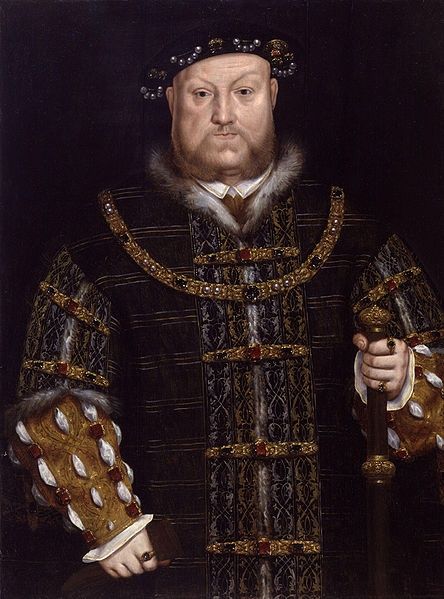
Largely due to Tyndall’s reformatory activities, by the 1530s the English- speaking world had become familiar with certain ideas from the continental Reformation. For a long time Tyndall lived in Europe – Germany and Belgium. While in Belgium, he planned to translate the entire Old Testament into English. Tyndall did not have time to carry out his plans, because in 1536 he was burned as a heretic near Brussels. By that time, the Reformation was already in full swing in England, the beginning of which was associated not with the reformatory activities of Tyndall, but with the name of King Henry VIII of England (1509-1547) from the Tudor dynasty.
Henry VIII initiated the English Reformation, but not for ideological reasons, but for purely personal reasons. Since 1509, he was married to his elder brother’s widow, Catherine of Aragon, the heiress of the founders of the Spanish state, Ferdinand of Aragon and Isabella of Castile. Henry VIII had a daughter, Mary Tudor, from his marriage to Catherine of Aragon, but he believed that the transfer of government through the female line could lead to political instability. He needed a male heir whose rights to the English throne would not be questioned by anyone. He considered entering into a new marriage with his maid of honor, Anne Boleyn, to be the only way to achieve this goal. However, Pope Clement VII, who was influenced by the German Emperor Charles V, the nephew of Catherine of Aragon, refused to annul the king’s marriage to her.
As a response, Henry VIII in 1529 convened Parliament, which passed a number of laws aimed at limiting the influence of the Papal See in England – first of all, it was about the abolition of taxes to the papal treasury. The next step of the resistance was the appointment in 1532 of a secret supporter of the Reformation Thomas Cranmer the Roman Catholic Churches Archbishop of Canterbury and Primate in England. In gratitude for the appointment, Cranmer annulled Henry VIII’s marriage to Catherine of Aragon in 1533 and recognized his marriage to Anne Boleyn as legitimate. In response, Clement VII excommunicated the King of England from the Church. But the king had Parliament on his side, which in 1534 passed the Act on the Subordination of the Clergy, which imposed strict obligations on the English clergy. Soon the Parliament of the Reformation adopted the “Act on Ecclesiastical Appointments” (1534). The document gave the monarch of England the right to appoint bishops and archbishops, depriving the Pope of this right. In turn, the English archbishops and bishops were charged with the immediate ordination of a protege appointed by the monarch of England.
At the legislative level, the creation of an independent national church of England, independent of Rome and headed by the English king, was enshrined in the “Supremacy Act” adopted by the English Parliament on November 3, 1534. The document proclaimed the king “the only Supreme Head on Earth of the Church of England, called “Ecclesia Anglicana"", that is, the Anglican Church. The King of England was endowed with “all the honors, titles, advantages, jurisdiction, privileges, powers, privileges, incomes and property (all honors, dignities, pre-eminences, verdicts, privileges, authorities, immunities, profits, and commodities)” befitting him as the Supreme Head of the Anglican Church.
Shortly after the break with Rome, Henry VIII and Archbishop Thomas Cranmer attempted to enlist the support of German Lutherans. In 1535, a delegation left England for Germany. Lutheran-Anglican negotiations took place, in which Luther himself took part. It was not possible to reach an agreement because Lutheran theologians were not ready to recognize Henry’s divorce from Catherine of Aragon. In 1536, after the execution of Anne Boleyn, negotiations were finally terminated by order of Henry VIII. Nevertheless, before the discussions were completed, by 1536, Lutheran theologians had managed to prepare a draft confession of faith called the Wittenberg Articles. Certain provisions of the Wittenberg Articles were included in the Ten Articles, the first doctrinal document of the Anglican Church, drawn up in 1536, shortly after the return of the British delegation from Wittenberg. Two years after the publication of the Ten Articles, in 1538, Archbishop Thomas Cranmer wrote the Thirteen Articles in Latin, the most Lutheran document of the Anglican Reformation. Many of its provisions to a greater or lesser extent echo or literally coincide with the first 17 and some subsequent articles of the Augsburg Confession. The individual theses of the “Thirteen Articles” were included by Cranmer in the “Forty–two Articles”, a statement of the Anglican doctrine compiled by him, which was published in 1553.
In 1539, the ecclesiastical and political situation in England changed dramatically. Bishop Stephen Gardiner of Winchester became Henry VIII’s closest adviser on church matters. Gardiner was Cranmer’s ideological opponent. Recognizing the supremacy of the royal authority over the Church of England, he nevertheless sought to return it to the foundations of the Catholic faith. Thanks to his efforts, the “Six-Article Statute” was adopted by the Parliament of England in June 1539. The “Six-article Statute” reflected Henry VIII’s willingness to take harsh measures to preserve the individual components of the Catholic tradition in the Anglican Church. The “articles” were short, and for the most part they were just theses, without any theological justification. The “Six-Article Statute” clearly and unambiguously stated Catholic teaching on: 1) transubstantiation (transubstantiation); 2) communion of the laity under one guise; 3) celibacy of the clergy; 4) private masses; 5) secret confession.
Archbishop Cranmer, although he could not agree with the provisions of the “Six-Article Statute,” nevertheless, he was forced to obey the will of the king. Cranmer’s individual views, such as criticism of private masses, were condemned by the document, which marked a sharp reversal of Henry VIII’s ecclesiastical policy. The “Thirteen Articles” compiled by Cranmer, with their adapted Lutheran ideas, never gained official status in the Anglican Church. In 1539, in England, Lutheranism succumbed to the onslaught of a kind of “revived form of Catholicism” without a pope. The Church of England remained in this state until the end of the reign of Henry VIII, who died on January 28, 1547.
After the death of Henry VIII, the nine-year-old King Edward VI (1547-1553) ascended the royal throne. With the accession of Edward to the throne, the church and political situation in England changed again. Stephen Gardiner was out of business. The initiative to determine the ways of development of the Church of England has again passed into the hands of Cranmer. In addition, the supporters of the Reformation were some of the most influential English statesmen of that period: Edward VI’s uncle, Duke Edward Seymour (ca. 1500-1552), who ruled on behalf of the infant Edward in 1547-1549, and John Dudley (1504-1553), who ruled on behalf of the king in 1549-1553.
In July 1547, the Prohibitions of Edward VI, compiled by Cranmer and E. Seymour, were published, a document dedicated to the tightening of church discipline. In November 1547, Parliament passed the “Act against Blasphemers and for Receiving Communion under two kinds” (“An Act against Revilers, and for Receiving in Both Kinds”). The document prescribed that the Sacrament of the Eucharist should be served under two types – “under the types of bread and wine, and not just under the guise of bread” – to all believers, not just priests. In 1547 The first “Book of Homilies” was published, a homiletic collection of 12 homilies (homilies) compiled under the editorship of Cranmer. The purpose of the collection is to provide clergymen with thematic sample texts for composing their own liturgical sermons in accordance with the teachings of the Reformation.
In 1549, Cranmer’s Book of Common Prayers was published, an English–language prayer and liturgical collection that became the main liturgical and partly doctrinal book of the Church of England. The Book of Common Prayer describes in detail the sequence of Anglican services, sacraments and rituals. Soon, in the same year, 1549, the publication of the “Act of Uniformity” followed, prescribing that the sacraments, along with morning and evening services, be performed exclusively in accordance with the “Book of Common Prayers.” Thus, the Book of Common Prayer became “the only authorized liturgical book in the Church of England.” The “Book of Common Prayers” did not contain ordination orders. They were compiled in 1549 and published in the spring of 1550 under the title of the Ordinal, a liturgical book outlining the orders of ordination to the ranks of archbishop, bishop, priest and deacon.
The Book of Common Prayers of 1549 was in many ways a compromise liturgical collection. Thus, Cranmer deliberately gave a compromise character to the rite of the Eucharist presented in it. This did not satisfy those conservative- minded clergymen of the Church of England who sympathized with Catholic teaching. They argued that “the new divine service rejects the teaching about the real bodily presence of Jesus Christ in the Eucharist.” Nevertheless, “criticism from conservatives was most often suppressed by the state authorities and had no consequences for the text of the Book of Common Prayers.”
In 1552, a new edition of the Book of Common Prayers was published. Together with it, the second “Act of Uniformity” was published, obliging lay people to regularly attend Anglican services on Sundays and “holy days”, performed in accordance with the new liturgical collection. The general structure of the Book of Common Prayers as a whole “remained much the same, while a large number of substantive changes were made to the main sequences.” Compared with the first “Book of Common Prayers” of 1549, the second “Book of Common Prayers” of 1552. It became more Protestant and reflected Cranmer’s desire to minimize the ceremonial component of Anglican worship. The celebration of the Eucharist has undergone the most profound revision. The “Book of Common Prayers” of 1552 included ordination orders, previously published separately as part of the “Ordinal”. Shortly after the publication of the Book of Common Prayer in 1552, Cranmer compiled a summary of the Anglican creed. It was published in June 1553 under the title “42 articles”. However, the provisions of Cranmer’s 42 Articles never entered into force, as Edward VI died suddenly on July 6, 1553. A new period in the history of the Church of England has begun.
With the death of Edward VI, the development of the Reformation in England was interrupted. On July 18, 1553, the zealous Catholic Mary I Tudor, the daughter of Henry VIII from his marriage to Catherine of Aragon, ascended to the royal throne. A supporter of political rapprochement with Catholic Spain, Mary began the restoration of Catholicism in England. Her reign can fairly be called the period of the English Counter-Reformation. Already at the end of 1553, all anti-Catholic laws passed in England after 1529 were repealed. All Protestant legislation during the reign of Edward VI was annulled. Catholic worship was restored. The “Book of Common Prayers” of 1552 was banned. On November 29, 1554, England officially reconciled with Rome, the Church of England was subordinated to the Pope and remained in this status until November 17, 1558– the day of Mary’s death.
In March 1554, the “Prohibitions of Queen Mary” were promulgated, aimed at eradicating Protestant “heresies” among the clergy of England and forbidding them to swear allegiance to “Royal Supremacy” in Church affairs. The “sacramentarians,” that is, supporters of the Protestant, primarily Zwinglian, view of the Eucharist, were condemned. All clergy who violated celibacy and married were banned from serving, after which they were subject to forced divorce.
The restoration of Catholicism in England and the adoption of anti-Protestant laws were accompanied by repressive measures against dissenters. In total, during the reign of Mary I, about 300 “heretics” were executed, for which she received the nickname “Bloody Mary.” Many Protestants were forced to flee England and seek political asylum in the countries of continental Europe. Thomas Cranmer was burned at the stake on March 21, 1556. Cranmer bravely accepted death and became one of the “martyrs” of the English Reformation, along with Hugh Latimer, who was also burned at the stake on October 16, 1555. The repressive measures of Mary Tudor were negatively perceived by the majority of the English population and only contributed to the greater spread of Protestant ideas in England.
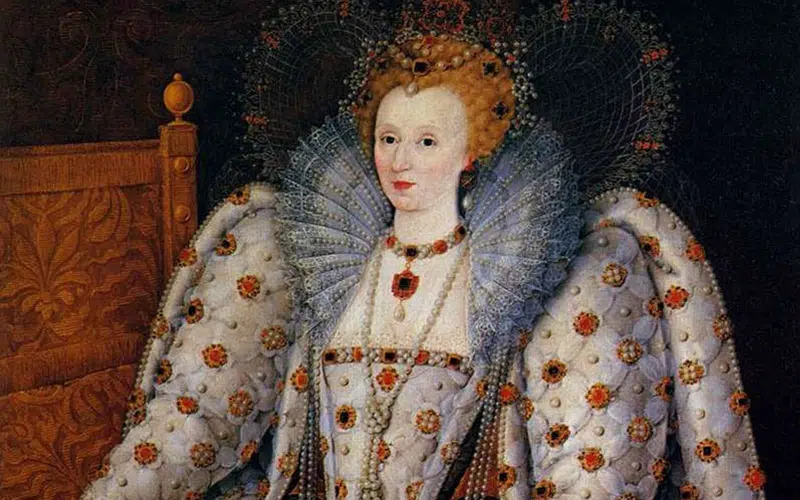
After the death of Mary I, Elizabeth I Tudor, the Protestant daughter of Henry VIII from his marriage to Anne Boleyn, ascended to the English throne in November 1558. The result of Elizabeth’s very long reign (1558-1603) was the final establishment of Anglicanism. Mary’s anti-Protestant legislation was repealed. Elizabeth’s primary task was to legislate the powers of the monarch of England as head of the Anglican Church. In 1559, the English Parliament passed a new “Supremacy Act.” By completely rejecting the pro-Catholic laws of Mary’s reign, the document returned the legal force to the reform acts of Henry VIII and Edward VI.
The Supremacy Act of 1559 endowed the monarch of England with “jurisdiction, privileges, exclusive rights and advantages in the spiritual and ecclesiastical sphere” (jurisprudence, privileges, superiors and pre- eminences, spiritual and ecclesiastical). Queen Elizabeth’s closest adviser on religious issues was Secretary of State William Cecil (1521-1598). He suggested that Elizabeth return to the liturgical use of the Book of Common Prayer of 1552, correcting several passages in it that caused the greatest rejection of conservative Anglican bishops. As a result, in 1559 The third edition of the Book of Common Prayers has been published. Its publication was accompanied by another “Act of Uniformity,” according to which failure to worship in accordance with the new “Book of Common Prayers” was punishable by up to life in prison.
The structure of the 1559 Book of Common Prayers completely coincided with the structure of the 1552 edition. “The number of substantive changes in the sequences included in the Book of Common Prayers was small, but they were fundamental.” An important change was made to the celebration of the Eucharist. Namely– in the verbal formula used in the communion of the laity. The Eucharistic formulas of the “Book of Common Prayer” of 1559 were no longer subject to substantial changes and are still pronounced during the Anglican Liturgy.
The Book of Common Prayers, 1549: «May the body of our Lord Jesus Christ, which was given up for you, preserve your body and soul for eternal life. May the blood of our Lord Jesus Christ, shed for you, preserve your body and soul for eternal life».
The Book of Common Prayers, 1552: «Accept and eat this, in remembrance that Christ died for you, and feed on It in your heart, with faith and thanksgiving (=and receive it through faith in your heart, with thanksgiving). Drink this in remembrance that the blood of Christ was shed for you, and be grateful».
The Book of Common Prayers, 1559: «May the body of our Lord Jesus Christ, which was given up for you, preserve your body and soul for eternal life: and accept and eat it, in remembrance that Christ died for you, and feed on It in your heart, with faith and thanksgiving (=and accept it through faith in my heart, with thanks). May the blood of our Lord Jesus Christ, shed for you, preserve your body and soul for eternal life: and drink this in remembrance that the blood of Christ was shed for you, and be grateful».
At the same time as the new “Book of Common Prayers”, the corrected ordination orders were published. They changed the name of the oath of allegiance to the monarch of England. Now, instead of the “Oath of recognition of the supremacy of the king”, ordained clergy had to swear an oath to Elizabeth in accordance with the “Oath of Recognition of the sovereignty of the Queen” (The Oath of the Queen’s sovereignty). The nature of the changes made to the Book of Common Prayer indicates that Elizabeth understood the need to reach agreement with the Anglican hierarchs who sympathized with Catholicism. Elizabeth showed that, while consistently defending her Protestant position, she was nevertheless ready, if necessary, to compromise, which she designated as “via media” (Latin. “the middle way”) between Calvinist Geneva and Catholic Rome.
During Elizabeth’s reign in England, the need to overcome disagreements on “religious issues” was particularly acute. After the death of Mary Tudor, radical Protestants returned to the country from forced exile, advocating deeper reforms in the spirit of continental Calvinism. They began to be called Puritans (Latin puritas – “purity”), i.e. supporters of the uncompromising “cleansing” of the Church of England from “papist” teachings. They considered Elizabeth’s actions in this direction insufficient, defending the independence of church communities from the state and rejecting the right of the monarch of England to interfere in church affairs. In addition, they denied the episcopal structure of the Church of England. The Puritans did not accept Anglican worship either. Thus, starting in the 1960s, the main opponents of the new “Book of Common Prayer” were no longer bishops who sympathized with Catholicism, but supporters of Puritanism. They were dissatisfied with “the complete cessation of the process of reforming and simplifying worship, as well as the preservation of church vestments and some rituals.” Seeing Puritanical ideas as a threat to the existence of the Church of England, Elizabeth initiated the persecution and harassment of supporters of Puritanism.
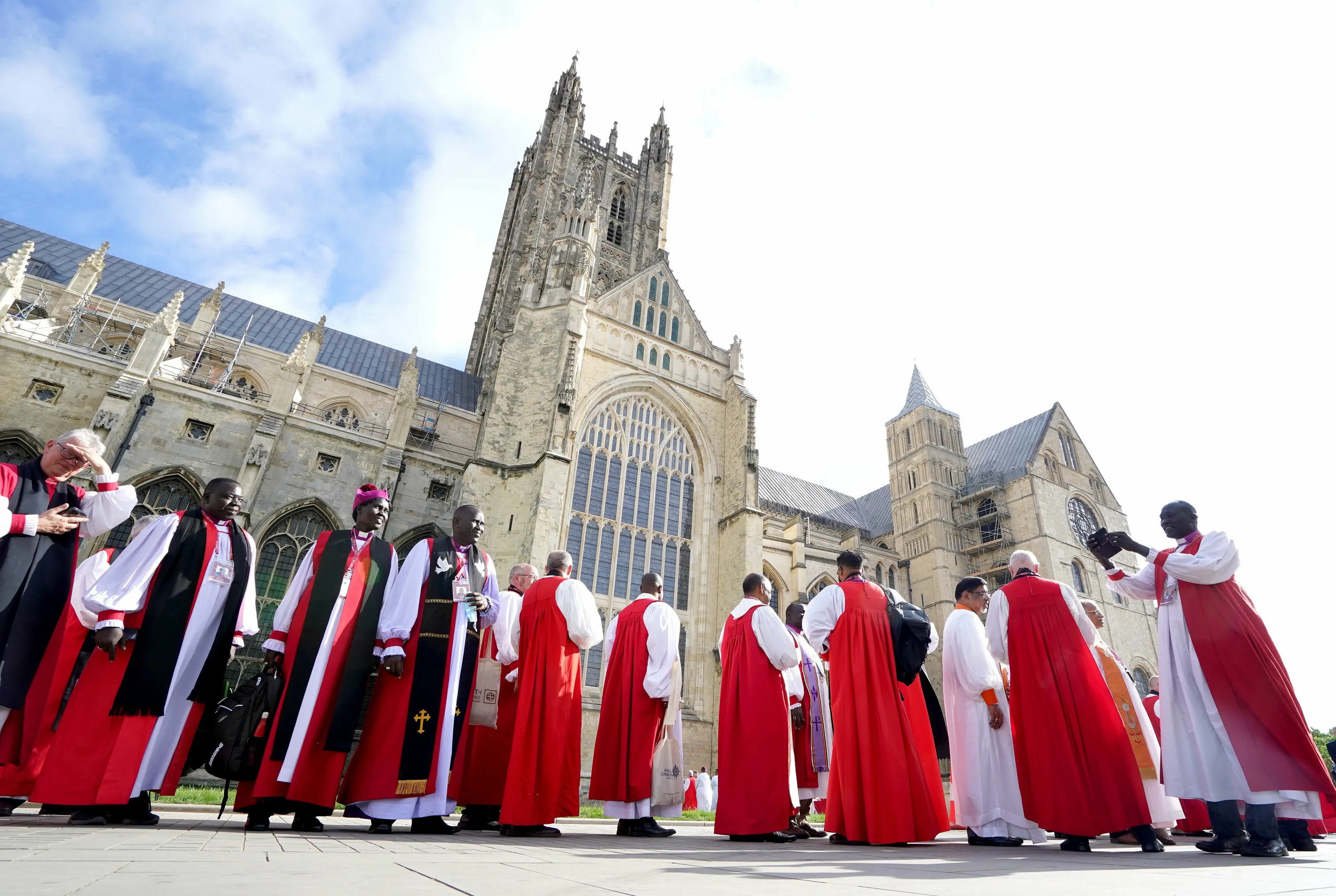
The Church of England currently has approximately 26 million members. Its head is the reigning monarch, who appoints, in consultation with the Prime Minister, two archbishops (of Canterbury and York), as well as other important clerics of the church. The Church of England is divided into 2 provinces: the southern one is headed by the Archbishop of Canterbury, and the northern one is headed by the Archbishop of York. Anglican bishops are the spiritual lords of the kingdom, as both archbishops and 24 bishops are members of the Upper House of Parliament. Decisions adopted by the Church of England come into force only after their ratification by a special parliamentary commission.
The General Synod of the Church of England preliminarily resolves issues (doctrinal, financial, church arrangements, etc.) that then require parliamentary approval. Its 574 members are elected for 5 years from clergy and laity and meet at least twice a year in York or London. In 1998, the 19-member Archbishop’s Council was established to coordinate, promote the mission of the Church of England. Its decisions are also submitted to the General Synod, which has the right to reject them.
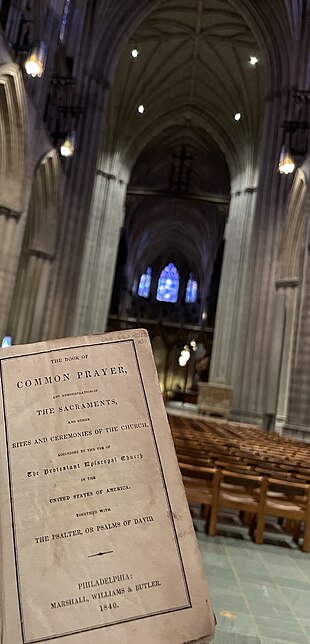
Worship in the Church of England is still conducted according to the Book of Common Prayer, although “proposals to revise the Book of Common Prayer or replace it with another liturgical book were repeatedly put forward in the XVII–XX centuries. both the clergy of the Church of England and various Protestant communities of nonconformists and Dissenters who separated from the Church of England due to disagreement with its church administrative structure and the form of worship legalized in it.” As a result, “in 1980 The Alternative Service Book was published, which became the 1st liturgical book in the history of the Church of England to be officially allowed to be used instead of the Book of Common Prayer”. Twenty years later”, in 2000, as a replacement for the “Alternative Service Book”, the General Synod of the Church of England approved the series of liturgical books “Common Worship”.
“Currently, the Book of Common Prayer is becoming less and less used, and in most parishes of the Church of England it has been replaced by books in the series of Public Worship. Despite this, the Book of Common Prayers retains the status of an official liturgical book and, if approved by the parish council, can be freely used for any worship services.” “At the end of modern editions of the Book of Common Prayer, Thirty-nine Articles are often published that are not formally part of the Book of Common Prayer.”
Unfortunately, Anglicans are increasingly drifting towards moral and doctrinal liberalism. In particular, they recognize the female priesthood. In the Church of England, women have been ordained deacons since 1977, and presbyters since 1990. In 1989, a woman was elevated to the rank of bishop for the first time in the Episcopal Church of the USA. The ordination of women has led to sharp disagreements and even schisms within the Church of England and in the Anglican Communion, in connection with which the resolutions of the XIII Lambeth Conference (1998) clarify that both those who approve of the ordination of women and those who do not accept it are true Anglicans (III. 2, 4).
Anglicanism, thanks to the colonial activity of Great Britain, had spread throughout the world by the 19th century, which led first to the emergence of autonomous Anglican churches, and then to the need to coordinate their activities. This is how the Anglican Communion came into being. The events of 1867 marked the beginning of its history, when disagreements between supporters of the “high” and evangelical trends in the Anglican Church of Canada confronted the bishops of the colonial Anglican churches with the need to discuss a number of common theoretical and legal issues. To this end, the First Lambeth Conference was convened in 1867 at the London residence of the Archbishop of Canterbury, Lambeth Palace. Since then, the Lambeth Conferences of Anglican Bishops have been held approximately every 10 years. The Conference is the Anglican equivalent of the Bishops’ Council. However, the decisions of the Lambeth Conference are not considered legislative acts and are not binding on the members of the commonwealth. Nevertheless, the decisions of the Lambeth Conferences enjoy great authority in the Anglican world, reflecting the general approaches of the Episcopate to the problems of modernity. the development of the Church, its social doctrine, and the problems of believers’ lives. The Chairman of the Lambeth Conferences is the Archbishop of Canterbury.
The Lambeth Conference of 1930 defined the Anglican Communion as “a fellowship within the united Holy Catholic and Apostolic Church, consisting of duly founded dioceses, provinces or regional Churches in communion with the See of Canterbury, which maintain and spread faith and order… prescribed by the Book of Common Prayers, they contribute to the realization of the national traditions of the Christian faith, life and worship in the territory of each of them and are linked together not by the central legislative and executive authorities, but by mutual devotion, supported through the general council of bishops during the conference.”
The Lambeth Conference held together the fragmented parts of the Anglican Communion for more than a century, until the crisis occurred in 2008. The Liberal Episcopal Church of the USA consecrated Gene Robinson, an openly gay man, as bishop of New Hampshire in 2006, which caused outrage among more conservative members of the community. The situation was further aggravated by the fact that the previous conference, held at Lambeth Palace in 1998, declared by resolution 1.10 that homosexuality was incompatible with biblical teaching. The conservatives particularly emphasized this issue in the Commonwealth. The traditionalist bishops held their own conference in Jerusalem, saying that the Lambeth Conference was no longer a symbol of the Anglican Communion, and the Archbishop of Canterbury was not trustworthy, and therefore its own self-governing body would be created for the breakaway part of the commonwealth. Which, in the end, happened. Anglican Conservatives have created their own structure – the Global Anglican Future Conference (GAFCON).
The split situation in the Anglican communion was exploited by the Roman Catholic Church, which in 2009 entered into a union with some conservative- minded Anglicans. Rome published the Apostolic constitution “Anglicanorum coetibus” (“To the Anglican Communities”). The Constitution gave Anglicans the right to convert to Catholicism not individually, but in whole groups. For Anglicans who joined the Roman Catholic Church, the document created a unique format of existence – former Anglicans were given the opportunity to form special “ordinariates” (pseudo-archie structures), to preserve some of their liturgical and canonical traditions (including the married presbyterate).
There are three Anglican ordinariates in the world today: the Personal Ordinariate of Our Lady in Walsingham in the United Kingdom; the Personal Ordinariate of The Chair of Saint Peter in the United States of America; and the Personal Ordinariate of Our Lady of the Southern Cross) in Australia. An important event was also the adoption of the revised liturgical collection “Ordinariate Use”, which contains, among other things, the Mass according to the Anglican rite from the “Book of Common Prayers”, but brought into line with the Catholic perception of the Eucharist.
Anglicans have been present in Russia since 1553, when Tsar Ivan IV the Terrible allowed worship services among British merchants in Moscow. In the Russian Empire, Anglicanism had no official recognition de jure, but in fact, parishes of the Anglican Church in Russia had existed since the time of Peter I. Currently, there are Anglican parishes in Russia that maintain contact with the Archbishop of Canterbury, as well as communities within the GAFCON (Global Anglican Future Conference) orbit.
Related Concepts
- 39-articles
- act-of-supremacy
- adams-disobedience
- anglican-communion
- anglican-identity
- article-28
- article-31
- augustine
- augustinianism
- authority-of-scripture
- biblical-canon
- bishops
- bloodless-sacrifice
- bondage
- book-of-common-prayer
- calvary
- calvin
- calvinism
- catholic-doctrine-of-the-mass
- christs-obedience
- church-authority
- church-of-england
- church-order
- communion
- comprehensiveness
- concupiscence
- council-of-trent
- deacons
- diocesan-administration
- election
- elizabeth-i
- elizabethan-settlement
- episcopacy
- episcopal-college
- episcopate
- ezekiel-1820
- fall
- god-and-israel
- good-works
- henry-viii
- high-church
- historical-continuity
- imputation
- infant-baptism
- low-church
- luther
- magisterium
- matthew-parker
- matthias
- modern-anglicanism
- orthodox-anglican-dialogue
- papal-authority
- penance
- piety
- predestination
- priesthood
- protestant-reformation
- protestant-sacramental-theology
- protestant-theology
- protestant-tradition
- real-presence
- rejection-of-papal-authority
- remembrance
- romans-512
- romans-7
- sacrament-of-priesthood
- sacramental-guarantee
- sacrificium
- salvation
- satan
- sinlessness-of-christ
- st-augustine
- st-john-cassian
- supernatural-birth
- treasury-of-merit
- word-and-sacrament