Comparative Theology — Topic 9. Protestantism.
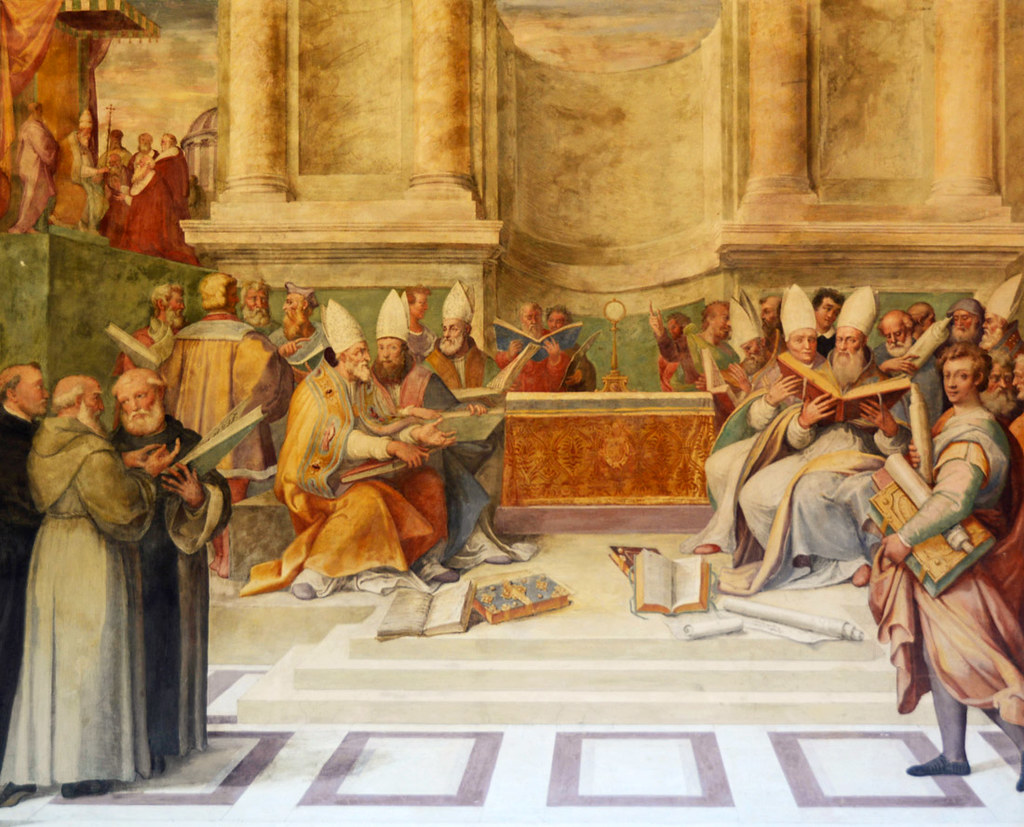
Obviously, such a historical and religious phenomenon as the Reformation, which already at the first stage of its existence influenced the fate of hundreds of thousands of people, could not have arisen from scratch. The pioneers of the Protestant movement themselves – M. Luther, W. Zwingli, J. Calvin, M. Bucer, Ph. Melanchthon, I. Ekolampady, T. Cranmer, J. Knox, and others – not only clearly understood that their mission had predecessors, but also actively used the achievements of some so-called “pre-reformers.” Among them, one can single out various individuals who sought to reform Catholicism to one degree or another: J. Wycliffe, Y. Gus, J. Savonarola, P. Waldo, and others, as well as whole relatively structured movements. Some of them appeared due to the activities of the mentioned personalities: “lollards”, which arose due to the activities of J. Wycliffe, followers of J. Huss – “Hussites”, admirers of P. Waldo – “Waldensians”. The Reformation was also ideologically prepared by humanists, conciliarists, sectarians like the Albigenses and medieval Chiliasts, who wanted to create a perfect society on earth.
In the theological and social views and concepts that these religious figures and movements professed and popularized, one can find ideas that later became the basis of the Reformation: the recognition of only Scripture as the source of doctrine, the rejection of the authority of the Pope, the preaching of the universal priesthood of the faithful, the preservation of the status of the sacrament only for Baptism and the Eucharist, the rejection of the veneration of saints and shrines, the desire to see only faith as a means of salvation, etc. All of the above were combined with demands to purify Catholic Christianity from moral vices, as well as to achieve social justice through the forced seizure of property of the clergy of the Roman Catholic Church.
However, all of these requests for the reform of church life, up to a point, were nothing more than the impulses of individual historical figures or religious enthusiasts unsupported by state resources. In some cases, it was just another surge in the activity of pseudo-Christian or radical sectarian movements. And if the situation in the Roman Catholic Church of the XV- early XVI centuries had not become more and more problematic, the request for reform would have remained a parochial, easily controlled and suppressed phenomenon from the outside. But the Reformation, as a religious and political revolution, became a logical and partly forced way to resolve the accumulated complex of problems in Roman Catholicism, which the Roman Catholic Church itself not only did not solve, but also aggravated.
First of all, the Reformation was a reaction to, as it was customary to put it in that era, the “corruption” of the Church, which manifested itself “both in the head and in the members.” The vicious and unpunished life of the Roman popes of the pre-Reformation period served as a sad and tempting example for Roman Catholic bishops, abbots, and parish priests, who believed that they too could indulge in earthly “pleasures.” But it was not only the indignation at the immorality of the Roman Catholic clergy that the preparations for the Protestant revolution manifested themselves.
Socio-political processes also played an important role in the preparation of the Reformation. The medieval model of the Western European Empire, as a supranational state headed by a Catholic emperor, was in crisis. The feudal lords, the rulers of the autonomous lands, sought greater independence from both the pope and the empire. And if in the XIV-XV centuries numerous dukes and counts were not yet ready for rebellion, then by the beginning of the XVI century they were ripe for it. Both the anti-papal and partly anti-imperial activities of M. Luther, who appealed not only to the conscience of German Christians, but also to the dignity of German nobles, turned out to be an ideologically convenient screen to mask the separatist aspirations of European feudal lords. After all, the break with the Roman Catholic Church also meant exemption from paying taxes to the papal treasury.
The harbinger and driving force of the Reformation, of course, was the so- called “humanist” movement, which brought together intellectuals of that time who not only studied the biblical languages, but also compared the realities of church life with what the Holy Scriptures and the works of the holy fathers said. Humanists (first of all, E. Rotterdam, I. Reichlin, U. von Hutten et al.) openly mocked the ecclesiastical mores of their time, ridiculing both the shortcomings of the clergy’s life and abuses of faith and rituals: worship before the authority of the pope, excessive (almost pagan) veneration of the Mother of God and saints, semi-magical ideas about the sacraments and indulgences. Another representative of the humanist movement, L. Valla, debunked the myth of the authenticity of the “Donation of Constantine” and the entire collection of “Isidore Decretals” - documents that glorified and justified papal omnipotence. The humanist movement has questioned the need for a church community as such, emphasizing the importance of individual spiritual experience in the spirit of Rebirth (here the beginnings of the concept of “sola fide” are revealed). However, humanists, not content solely with inner and intangible experiences, sought a new objective and, as it seemed to them, infallible religious and moral foundation for Western Christianity. Humanists accustomed to working with texts proposed to consider the Holy Scriptures as such (here we find the starting point of the formation of the concept of “sola Scriptuta”), which was supposed to replace the papacy, which had discredited itself.
It was the unlimited power of the Roman pontiffs and their lack of jurisdiction over the council that served as one of the main reasons for the beginning of the Reformation. Since the time of Innocent III, the popes of Rome have become accustomed to feeling like the de facto rulers of the Christian universe. Such self-positioning regularly brought the papacy into conflict with the secular rulers of Europe. Another clash with the French Kingdom, led by Philip IV the Handsome, had disastrous consequences for the Apostolic See. Philip not only defeated Pope Boniface VIII, but also achieved the transfer of the papal residence from Rome to Avignon in 1309. The Apostolic See was located here until 1371, when the popes returned to Italy, which, however, was not part of the plans of the French cardinals, who decided not only to return to Avignon, but also to choose their own pope there. This happened in 1378.
This is how the Great Western Schism began, when two pontiffs, the Pope of Rome and the Pope of Avignon, claimed the title of the only true pope. There were certain political forces behind each of them. The Conciliarism movement tried to cure Catholicism of the pernicious disease of Schism (from Latin. concilio – “cathedral”), whose representatives were, in particular, professors of theology at the University of Paris. It was they who, in 1381, first appealed to the secular rulers of Europe to organize an Ecumenical Council to end the schism as soon as possible, and in 1394. He proposed three methods of dealing with the schism: via cessionis ‑ the abdication of both popes, via compromissi ‑ the discussion of the rights of both of them by a competent commission, and via synodi ‑ the convocation of an Ecumenical Council, which will settle the issue. There was another way – via facti (solving the issue by force). At that time, none of the options were supported by the secular authorities. However, there were supporters of conciliarism among the cardinals. It was they who, in 1409, eventually initiated the convocation of the Council in the Italian city of Pisa, which eliminated the powers of the popes of Rome and the Avignon branches, electing a new one. This initiative has not received support from either political or social forces. As a result, the “two-papacy” turned into the “three-papacy.”
The Great Western schism was overcome at the Council of Constance (1414-1418), which not only elevated the legitimate pontiff to the Roman throne, but also tried to subordinate the head of the Roman Catholic Church to the conciliar will. At the same time, the Council in Constance condemned, in the person of Yan Huss, all attempts to reform Catholicism from below. Huss was accused of heresy and burned. It seemed to the concilarists that the necessary balance in terms of peaceful reform of church life had been achieved, but soon the papacy took revenge. The Council of Basel (1431-1449), which stood on the positions of conciliarism, refused to obey the will of Pope Eugene IV. The pontiff, hiding behind his desire to conclude a union with the Orthodox Greeks, decided to put an end to the conciliar movement and demanded that the council’s meetings be moved from distant Basel to controlled Italy, first to Ferrara and then to Florence: “Florence put an end to the development of the conciliarist movement in the West, which threatened to change the very structure of the Church. The great achievement of the Council of Florence for the West was that it ensured the victory of the popes in the struggle against conciliarism and the survival of the traditional order of the Church.”
The Papacy regained full power in the Roman Catholic Church, and the aforementioned Eugene IV became the first pontiff from the infamous galaxy of Renaissance popes, the most prominent representative of which was Alexander VI, a representative of the vicious Borgia family. Renaissance popes were so passionate about decorating Rome, patronizing the arts, and leading their own immoral lives that at some point they lost their sense of self-preservation. The last chance to avoid the Reformation was the Fifth Lateran Council (1512-1517), convened by Pope Julius II and continued by his successor, Leo X. This council, as Ph. Schaff writes, was “notable mainly for the fact that it decided nothing,” and completed its work on the eve of Luther’s speech, which was perceived by Rome as meaningless “monastic squabble.”
The Roman Catholic Church, having proved incapable of a peaceful reformation, pursued a direct course towards a revolutionary reformation. And the tragic situation for Roman Catholics was that the papacy, endowed with ultimate and uncontrollable power, not only failed to save the Roman Church from disintegration, but was one of the main causes of the coming crisis, which manifested itself not only as an ecclesiastical process, but also as a comprehensive political conflict that led to significant changes on the map of Europe. Moreover, in the course of history, the Reformation has become (directly or indirectly) one of the determining factors in the development of modern humanity (at the state, political, economic, and private levels) and has even begun to have a reverse impact on the Roman Catholic Church (for example, through ecumenical thinking, which is significantly reflected in documents II Of the Vatican Council), as well as, in certain aspects, on the Orthodoxy.
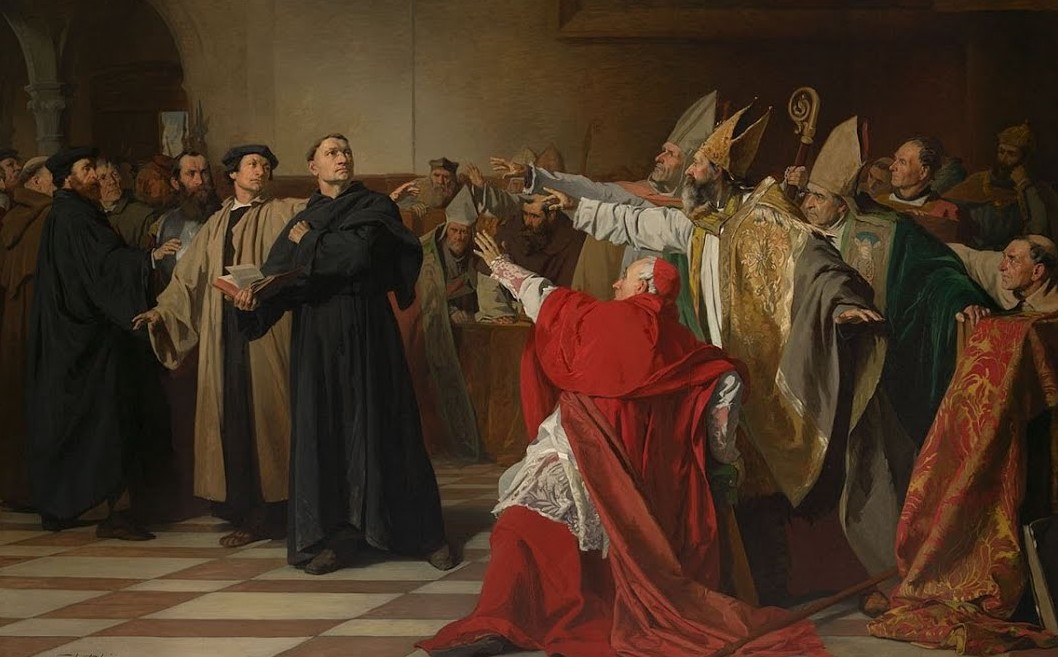
The terms “Reformation” and “Protestantism” that we use have a completely tangible historical basis. Thus, the name “Protestants” refers to the Second Speyer Diet (Reichstag) of 1529. (The “Reichstag” should not only be understood as a building in the center of Berlin, but as the supreme legislative body of the Holy Roman Empire of the German nation - the supranational union of German, Italian, Balkan, Frankish and West Slavic states and peoples that existed from 962 to 1806), at which 6 imperial princes and 14 free cities of the Holy Roman Empire spoke with a protest against the persecution of M. Luther and his followers.
The name “Reformation” (reformatio - “correction; transformation, transformation; reformation”) goes back to the motto of the French Reformed Calvinists: “Ecclesia reformata et semper reformanda” (“The reformed Church and constantly reforming”). It should be noted that not all followers of the Reformation believe that their faith and church structures should be in constant change (for example, the same Reformed Calvinists today are the most conservative representatives of Protestantism), but historically, the term “Reformation” is mainly used to describe the events that occurred with the Roman Catholic Church in the first half of the sixteenth century and led to the separation of Protestant Christians from it.
The first movements of the Reformation did not have administrative and doctrinal unity with each other. This circumstance was due to both political and personal reasons. For example, in April 1529, at the so-called “Marburg Debate”, M. Luther and W. Zwingli could not find a common understanding of the Eucharist, not so much because of theological differences, but because of personal hostility to each other. The founder of the English Reformation, Henry VIII Tudor, alternately communicated with continental reformers and broke off established contacts, focusing more on the political situation rather than on the desire to follow some objective doctrinal principles.
But the differences between the branches of the Reformation are not only in language and cultural affiliation. Each of them was more or less influenced by philosophy and scholastic theology of the XV-XVI centuries. Namely, Moderna (“new way”) and schola Augustiniana Moderna (“new Augustinian school”), which replaced the previous theological tradition (the so–called “via antiqua” - “old way”). Via Moderna recognized the (albeit flawed, but tangible) importance of human efforts in the matter of salvation. The Schola Augustiniana Moderna insisted on the omnipotence of Divine grace and, consequently, the helplessness of man before the Providence of the Lord. Moderna Luther and his followers tended to be more “via Moderna,” while Zwingli and Calvin tended to be “schola Augustiniana moderna.”
However, despite the contradictions of the past and present, Protestantism as a religious and historical phenomenon is based on five doctrinal theses, which have received the Latin name “quinque sola” (“five “only”).:
1. Sola Scriptura – only by Holy Scripture;
2. Sola fide – only by faith;
3. Sola gratia – only by grace;
4. Solus Christus – only Christ;
5. Soli Deo gloria – glory to God only.
All Protestant denominations, without exception, adhere to these five doctrinal theses and thus assert that:
1. The Scriptures alone are the only source of faith;
2. A person is justified before God only by faith.;
3. The grace of God, as a consequence of the atoning Sacrifice of Christ, is the only means of salvation.;
4. Only the Lord Jesus deserves to be worshipped.;
5. Only God needs to be given glory.
However, Protestants of various trends give their own interpretation to each of these theses, which in practice refutes the principle of “sola Scriptura”, since along with Scripture, each of the Reformation movements eventually formed its own tradition, recorded in the so-called “symbolic books” - Protestant catechisms, creeds, liturgical texts.
Symbolic books contain ideas peculiar to a particular Protestant denomination about the nature of faith, the essence of the sacraments, ways in which a person interacts with Divine grace, and the possibility or impossibility of venerating saints and relics. Thus, the theoretical basis common to the followers of the Reformation, was formulated in the 16th century in the “quinque sola”, in practice represents a whole range of different views, in some cases diametrically opposed. This is one of the main reasons for the fragmentation of the Protestant community.
As noted earlier, comparative theology at present studies mainly Protestant denominations of the first generation during the Reformation:
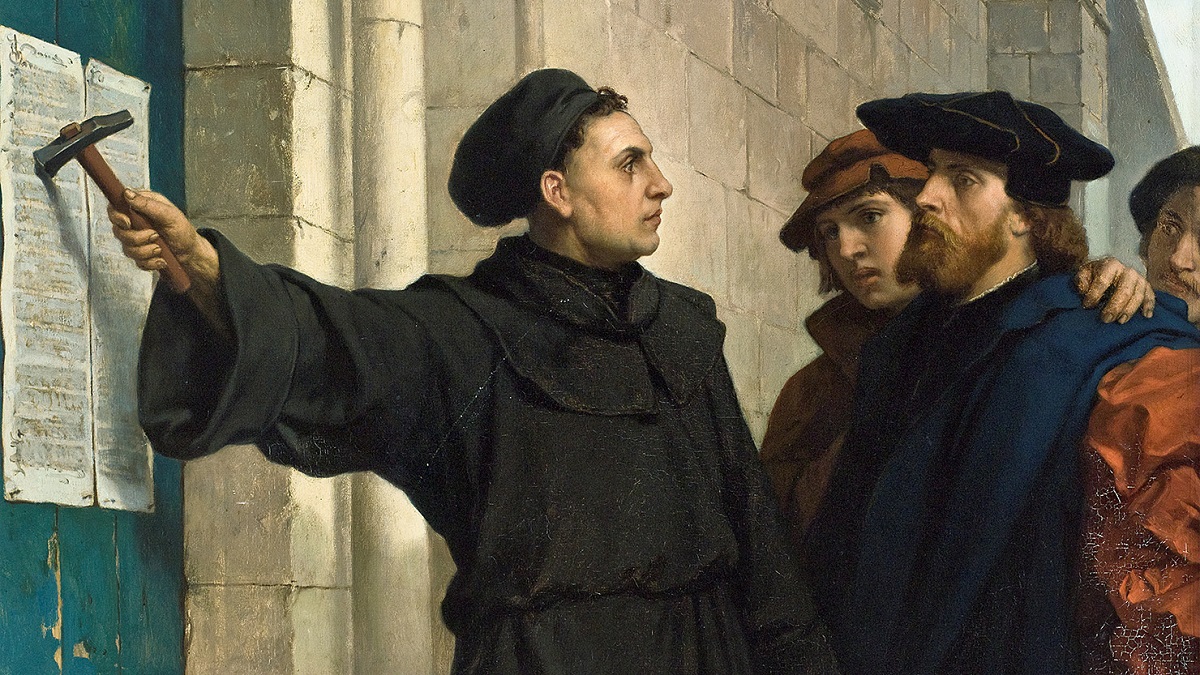
1. Lutheranism or “Evangelical Christianity”, arose due to the activities of the former Roman Catholic monk Martin Luther. The date of Lutheranism’s beginning is considered to be 1517, when Luther published his “95 theses” against the sale of indulgences. Currently, about 75 million people identify themselves as Lutherans, living not only in Germany (the birthplace of Lutheranism), but also around the world.
2. The Reformation, which originated in Switzerland thanks to the activities of a former Roman Catholic priest and Luther’s contemporary Ulrich Zwingli, who had broken off relations with Roman Catholicism by 1519. After the death of Zwingli, the community of Swiss Protestants was led ideologically by Jean Calvin, which gave the Reformers a different name – “Calvinists.” Currently, thre are about 80 million Reformers identifying themselves as Calvinist and also live all around the globe (In different national traditions, the Reformers have or had different names: in France – Huguenots, in England – Puritans, in Scotland and the USA – Presbyterians).
3. Anglicanism, formerly known as the Church of England, which arose in 1534 as a result of the personal rebellion of King Henry VIII of England against Catholic Rome. A distinctive feature of the Anglicans was the proclamation of the monarch as the head of the national church. At the present stage, there are about 100 million Anglicans, living mainly in Great Britain and its former colonies.
There are two more confessions listed in the doctrinal and historical terms:
4. Old Catholicism is a denomination that arose as a result of the rejection by a number of Catholic clerics and theologians of the decisions of the First Vatican Council (1869-1870). Initially, Old Catholics tried to exist as a true and ancient (“old”) form of Catholicism cleansed from the annoying errors of Rome. But later on, Old Catholicism turned, in fact, into one of the types of Protestantism, having entered into communion first with the schismatic Utrecht Church, and then with the Anglicans. Currently, the number of adherents of this denomination is just over 100 thousand people.
5. Methodism is a denomination that arose within Anglicanism due to the pastoral and preaching activities of brothers John and Charles Wesley. In 1791, the “Methodists”, so named for their desire to methodically fulfill the commandments of Christ, became a separate denomination, breaking with Anglicanism. Currently, about 75 million people worldwide belong to Methodism.
It was in the Protestant environment that the ecumenical movement arose and initially developed, which we will talk about later.
- Introduction
- Basic terms and concepts related to Protestantism
- Background and causes of the Reformation
Related Concepts
- 39-articles
- 95-theses
- anglicanism
- antipope
- augustine
- authority-of-scripture
- biblical-canon
- book-of-concord
- calvinism
- charles-wesley
- christian-unity
- church-as-mediator
- conciliarism
- council-of-constance
- council-of-konstanz
- council-of-trent
- councils-of-pisa-constance-basel-and-florence
- denominational-fragmentation
- dialogue-of-love
- ecumenical-councils
- erasmus
- first-vatican-council
- formula-of-consent
- france
- good-works
- humanism
- hussites
- imputation
- indulgences
- invisible-church-of-the-elect
- isidore-decretals
- john-wesley
- lollards
- lorenzo-valla
- luther
- lutheranism
- magisterium
- methodism
- monergism
- orthodox-protestant-relations
- papacy
- papal-authority
- penance
- pre-reformers
- protestant-denominations
- protestant-fragmentation
- protestant-reformation
- protestant-theology
- protestant-tradition
- protestantism
- reformation
- rejection-of-papal-authority
- rejection-of-saint-veneration
- relics
- renaissance
- roman-catholic-church
- rome
- salvation
- scholastic-theology
- second-vatican-council
- treasury-of-merit
- utrecht-church
- veneration-of-saints
- waldensians
- world-council-of-churches
- zwingli