Comparative Theology — Topic 5. The Roman Catholic doctrine of Salvation.
- The Roman Catholic doctrine of SalvationThe Roman Catholic doctrine of original righteousness and original sin.
- The Roman Catholic doctrine of Grace and personal morality
- The Roman Catholic doctrine of the treasury of superlative merits and indulgences
- The Roman Catholic doctrine of man’s posthumous fate. The blissful vision (visio beatifica). Purgatory.

One of the fruits of Christ’s redemptive work, according to the Roman Catholic teaching, was the outpouring into the world of “justifying grace” (gratia iustificans), which is communicated by the Holy Spirit and serves to connect people to the saving deeds of God. The Roman Catholic theology is characterized by the following: Augustine’s isolation of the concept of grace from the general concept of salvation and consideration of grace in close connection with the inner life of the human soul (psychologization). Within the framework of this approach, grace is understood by the Roman Catholic Catechism primarily as the help needed by a person exhausted by sin: “Called to beatitude, but wounded by sin, a person needs God’s salvation. Divine help comes to him in Christ through the law that guides him and through grace that supports him.” Augustine also posed the fundamental problem of the relationship between personal freedom and the action of Divine grace. In medieval scholasticism, subtle gradations were developed in the description of acts of grace in accordance with the sequence of their manifestation and functional features, which, however, have now lost their theological relevance.
According to the Roman Catholic teaching, man is not predestined to salvation or destruction. Moreover, he is able to contribute in every possible way to Divine providence. This is due to the fact that the human will (arbitrium), damaged by sin, did not lose a certain degree of freedom in its foundation, “but was only weakened and misdirected in its power” (Decretum de iustificatione. 1). In the case of a sinner’s spiritual and moral conversion, God accompanies him on the paths of salvation, providing gracious assistance (gratia cooperans), making a person capable of accepting by faith and knowing supernatural Revelation (Decretum de iustificatione. 5).
In this process, according to the Catechism, the interpenetration of a person’s personal righteousness and the righteousness of God “infused” into him for the sake of Christ’s merits takes place: “Human virtues acquired by upbringing, conscious actions and constant efforts are purified and exalted by divine grace.” At the same time, personal efforts in the cause of salvation, faith, good deeds and intentions are attributed to a person as a merit, and are the basis and a necessary condition for growing in glory.
On the question of the relationship between human nature and divine grace, the Roman Catholic theology primarily emphasizes that grace, being fully a gift from above, is a reality of supernatural order (supernaturalis) (Dei Filius. 3). At the same time, the granting of grace is considered as an act in harmony with the natural constitution of man, consistent with its internal capabilities. In the classical formulation, this idea is expressed by the axiom “grace does not destroy, but replenishes and perfects nature” (gratia non destrucit, sed supponit et perficit naturam). The modern Catechism of the Roman Catholic Church says that “the divine initiative in the work of grace warns, prepares and prompts a free human response. Grace responds to the deep aspirations of human freedom; it calls it to co-creation and perfects it.”
In the context of this issue, ideas about created and uncreated grace also developed, but they did not receive a final dogmatic formalization in Catholicism. On the one hand, the original uncreation of grace (gratia increata) follows from the fact that its direct source is God, who gives Himself, the main content is the Holy Spirit Himself, Who lives graciously in the hearts of believers and is their “inner teacher”, and the main consequence is participation in the life of the Holy Trinity (CVatII. Lumen gentium. 4). On the other hand, the fruits of the divine presence manifested in man belong to the created order of being, bear the imprint of human religious activity and have accordingly created forms of expression, becoming a kind of transformation of the uncreated grace of God, i.e. the life of the Holy Spirit in the faithful.
In this context, Pope Pius XII warned that “any image of mystical unity should be rejected, in which believers, in whatever way, would go beyond the created and appropriate the divine, even if only one of the attributes of the eternal God would be attributed to them as something inherent in them” (Mystici corporis, 3814). Many modern Roman Catholic theologians insist that God does not lose His transcendence when He inhabits a person who retains his created nature. This shows a significant difference from the view that has prevailed since the time of Scholasticism regarding the existence of two types of grace – uncreated and created – and their perception as two realities that do not actually communicate. As a result, this led to primitive and sometimes even exalted ideas about the nature of “created” grace in the spiritual experience of some Catholic saints.
For a long time, the satisfying idea of the redemptive feat of Christ, which prevailed in the Roman Catholic soteriology, left an imprint of legal logic on ethical teaching. The ideas of proportionate satisfaction for sin, understood primarily as an insult to the divine dignity of the Creator, compensation for moral damage, restoration of order and legality were transferred directly to the plane of spiritual relations between man and God, and also reflected in canonical discipline, ascetic and sacramental practices (especially the sacrament of penance).
On the basis of the legal approach to the moral life of Christians, the concept of merit was established — both due and super-due, casuistry arose, in which a detailed classification of sins was developed, divided into mortal or grave (capitalia) and venial or light (venialia), their combinations were catalogued, the circumstances of committing sinful acts were taken into account, Various forms of responsibility were defined. The penitential discipline and spiritual practice of the Roman Catholic Church began to focus on casuistic codes.
The idea of the role of moral merit in personal salvation has gained particular importance. According to him, depending on the lifestyle and behavior of a Christian, the grace of justification granted in baptism can either increase or be lost. In response to the Protestant thesis of salvation by faith alone (sola fide), Catholic teaching condemned those “who say that once justified, a person can no longer sin or lose grace,” or “that the grace received is not preserved and does not increase before God through good deeds” (Decretum de iustificatione. 23–24). Moreover, it is argued that these deeds, or merits, are not just fruits or signs of justification received, but also serve as the reason for its increase (Ibid.). In other words, the reward in the form of the addition of a gracious gift to the human soul follows a well- done job.
Although scholastic theology bases every possibility of Christian goodness on the grace “infused” by God (gratia infusa), earned by the Redeemer, the saving role of human merit has gained significant importance. At the same time, due to the dominance of legal concepts, the relationship between them loses its internal connection, which, according to Archbishop Sergius (Stragorodsky), inevitably leads to a subsequent contradiction: “If according to Christian teaching a person is saved only through Jesus Christ and only when he does the works commanded by Christ, then for the mind of scholastics it means that Christ and man present to the truth of God, each on his side, a sufficient price for the promised eternal life. But if the work of Christ and the work of man are concepts of a legal order, then they are mutually exclusive: as much as the price of human merit increases, so much is the merit of Christ unnecessary.”
The formalization of approaches in the field of morality and repentance in the Roman Catholic Church has led to the displacement of ascetic practices into a separate area, into a specific way of church life, not typical of the vast majority of Catholics and not obligatory for them. “Catholicism,” wrote Professor S.M. Zarin, “by “asceticism” means almost exclusively the fulfillment and implementation of the three so—called “evangelical counsels” — poverty, celibacy and obedience, i.e. … identifies “asceticism” with monasticism as a state striving to achieve the highest evangelical perfection. According to Catholic teaching, asceticism … is not required by Christian commandments; asceticism is not the fulfillment of what is due, but of what is beyond due.”
After the Second Vatican Council, which called on all Catholics, without exception, to strive for holiness, various additional so-called institutions of consecrated life, including secular ones, arose in the Roman Catholic Church in order to promote the realization of Christian moral ideals and love: “Lay people are called by self-denial and holiness to conquer the kingdom of sin in themselves and in the world.”. The satisfaction model and the casuistic scheme gave way to a different understanding of Christian morality, close to the Tradition of the Ancient Church. Namely, that the essence of the growth commanded to Christians consists in inner development, the purpose of which is to deepen the “mystical” union with Christ and participate in the mystery of the Holy Trinity through the sacraments; that “spiritual progress requires asceticism and mortification of the flesh, which gradually lead to a life of peace and joy of the Beatitudes.”
Nevertheless, the Roman Catholicism has not completely abandoned its inherent desire to clarify and classify. Thus, in the modern Roman Catholic Church there are mandatory disciplinary regulations aimed at combining moral aspirations with liturgical life. The followinf examples: 1) abstaining from work and participating in Mass on Sundays and holidays; 2) confessing sins at least once a year; 3) receiving the sacrament of the Eucharist at least once a year, at Easter time; 4) observing the periods of abstinence from meat and fasting prescribed by the Church (that is, limiting the amount of food); 5) support the Church in its needs. The fact that these laws aim to “guarantee believers the necessary minimum in the spirit of prayer and moral effort, in increasing love for God and neighbor,” testifies both to the spiritual and pastoral crisis and to the lingering remnants of a casuistic approach to understanding salvation.
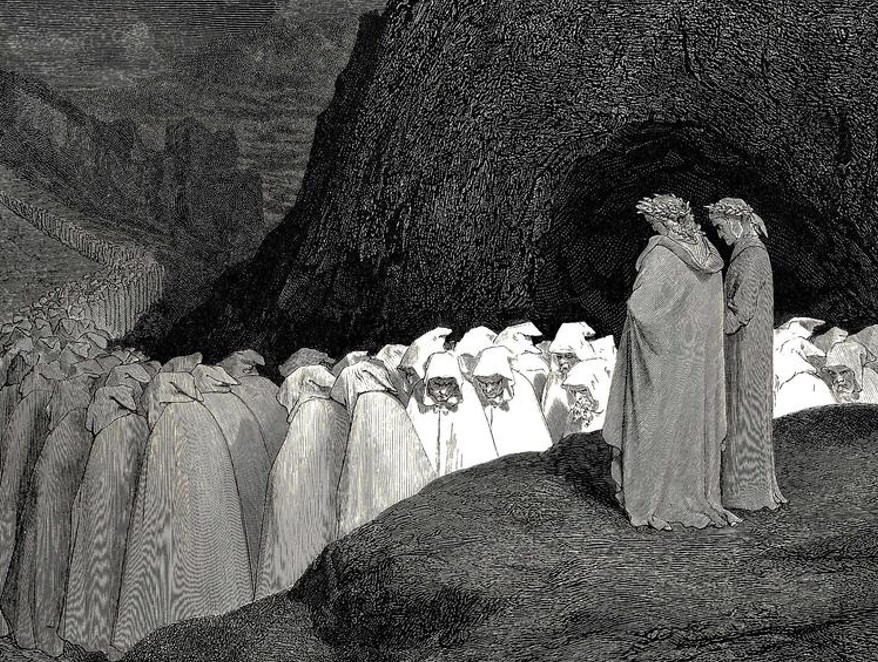
The question of a person’s posthumous fate is considered in the Roman Catholicism in connection with the belief in the universal resurrection of the dead and the Last Judgment (Confessio fidei. 1). The Roman Catholics emphasize the positive meaning of physical death found in Christ, which gives believers, thanks to the omnipotent power of the risen Savior, hope for incorruptible life, when “the righteous will reign forever with Christ, glorified in body and soul” (CVatII. Gaudium et spes. 18). However, immediately after exodus from the body, the soul remains, according to the teachings of the Roman Catholic Church, in an intermediate state until the final universal Judgment and resurrection. During this period, the way of its existence is directly dependent on the justice of God, which pronounces a verdict in accordance with the spiritual and moral content of their earthly life and personal merits (Decretum de iustificatione. 16), that is, not because of the original divine predestination, but according to the idea of legitimate Divine retribution.
From the point of view of the Roman Catholic Church, there are three such intermediate spiritual states: suffering torments, bliss and purification. From the point of view of the Russian Orthodox Church, the latter has the ability to change the soul for the better through suffering. Regarding the fate of sinners after death, Catholic teaching asserts that “the souls of those who die in a state of mortal sin immediately after death descend to hell (ad inferna), where they are tortured with hellish torments” of varying severity. For a long time, almost all unbaptized people were classified as dead, based on the thesis that without baptism “no one can be justified” (Decretum de iustificatione. 3-4). The modern Catholic Catechism has adopted a restrictive definition: “baptism is necessary for salvation for those to whom the gospel was proclaimed and who had the opportunity to ask for this sacrament.”
From the point of view of the Roman Catholic Church, the souls of Christians who have achieved holiness in the earthly field acquire heavenly bliss after death — the sight of “the triune God Himself as He is” (Laetantur caeli: Bulla unionis Graecorum), which continuously brings them endless pleasure until the universal and final Judgment, and after it forever. In contrast to the chaste attitude of Orthodox theology, in which God—vision refers to the contemplation of uncreated reality “around God” due to His absolute essential inaccessibility, according to Catholic teaching, the righteous receive direct (intuitiva) — face to face (faciali) - “blissful vision” (visio beatifica) Divine Hypostases (personae) and Essences (essentiam). “It is in this vision that we will be given, in an inexpressible way, through the eyes of our spirit, to contemplate the Father, the Son, and the Divine Spirit, to be strengthened by the divine light, to be present ourselves during this eternity at the exodus of Divine Persons, and to be filled with joy very similar to that which constitutes the happiness of the Most Holy and Indivisible Trinity” (Mystici corporis).
In modern Catholicism, the heavenly glory of the saved is revealed in the image of the blessed community of “all who are perfectly united to Christ,” as “a perfect life with the Most Holy Trinity … communion of life and love with Her, with the Virgin Mary, the angels and all the saints.” The eternal punishment of hell, on the contrary, is presented as “a state of final self- exclusion (auto-exclusionis) from communion with God and the blessed” due to grave sin. It is also stipulated that, due to the divine transcendence that is irresistible to man, the vision of God as He is, even for perfect souls, is possible only on His gracious initiative, “when He Himself reveals His secret to direct human contemplation and gives man the ability to do so.”
At the same time, a strict condition for a “blissful vision” is not only death in repentance and friendship with God, but also the need to appear before a righteous Judge in perfect grace and purity, i.e., having previously brought satisfaction for all committed sins and getting rid of “disordered attachment to creatures.” The souls of those who did not fully accomplish this during their earthly life must undergo posthumous purification by the torments of fire in order to enter into heavenly joy, which, however, are different from the punishment of the damned and are finite. The “place” or intermediate state in which this happens is called purgatory. Medieval ideas about this, which arose both on the basis of some New Testament statements about the possibility of forgiveness of sins in the next century (Matthew 12:32) and salvation through fire (1 Corinthians 3:13, 15), and to a greater extent on the church practice of prayer for the dead, “so that they may be freed from sin” (CVatII. Lumen gentium. 50), were dogmatized by the Councils of Ferrara, Florence and Trent (Decretum de iustificatione. 30).
In the Roman Catholicism, it is believed that those in purgatory “receive help through the intercession of the faithful, and especially through the atoning Sacrifice of the altar” (Decretum de purgatorio (1563) // Ibid. N 1820), and since the 15th century there have also been cases of granting them indulgences. On this basis, false ideas arose about the possibility of liberating souls undergoing purification by the power of the supreme authority of the pontiffs (through the purchase of indulgences), despite the official instructions of the magisterium on the absence of any papal jurisdiction over purgatory and the need for prayers and works of mercy to shorten the stay of the deceased there.
The controversial issue of the origin and nature of the purifying “fire”, which was raised, among other things, in anti-Catholic polemics, has not received a final dogmatic solution in the Roman Catholicism. There are certain indications only that it has a redemptive effect on the soul and, therefore, is “transitory”, “temporary” (Super quibusdam). The problem of understanding the category of temporality in the conditions of otherworldly existence that arises in connection with this statement also remains open. In modern Catholic theology, there is a tendency to describe the “fire” of purgatory in a positive way — “as an ennobling, purifying and sanctifying force of God’s holiness and mercy,” causing suffering to the soul due to its inability to contain the fullness of divine love and at the same time bringing it closer to it.
The Roman Catholic beliefs in indulgences, the treasury of merit, and purgatory are not recognized in Orthodoxy and as having no direct basis in Holy Scripture and not attested to in Church Tradition and patristic theology. These elements of Catholic doctrine are also poorly correlated with the very spirit of the Gospel, which presupposes contractual obligations between God and people, but a fundamentally different kind of relationship. As noted by Archpriest Sergiy Bulgakov: “Without detracting from the justice and truth of God, which must be satisfied, Orthodoxy places at the center of the doctrine of salvation the love of God, who did not spare the Son of God for the salvation of the world through his deification. The incarnation of God, which is performed directly for the redemption of fallen man, his reconciliation with God, is perceived in Orthodoxy primarily in its general and independent sense – the deification of man, the communication of Divine life to him. Since man has fallen, God-manhood becomes, first of all, a way of reconciliation between man and God, redemption, which has the consequence of salvation in the sense of deification.”
Thus, the Roman Catholic understanding of soteriology, based on the principles of Roman law, is fundamentally different from the Tradition of the Ancient Church, and also has a detrimental effect on repentance and the personal spiritual life of an individual believer. Roman Catholic soteriology appears not as a simple theoretical theological error that could pass for a private theological opinion, but as a distorted view of the meaning of human life. Thus, it is a source of implementation of the gospel teaching of flawed asceticism and, in particular, flawed repentance.
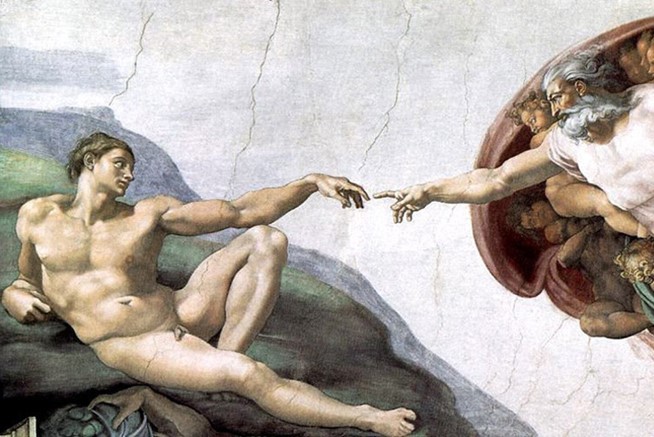
The Roman Catholic doctrine of original sin and salvation was formalized doctrinally at the Council of Trent in the context of the struggle against the Reformation, whose representatives insisted on the complete and unchangeable sinfulness of even a man justified by God. The Pelagian and semi-Pelagian disputes of the fifth and sixth centuries also left a noticeable imprint on the soteriology of the Roman Catholic Church. about the extent of the sinful damage of the human being and his freedom, expressed in the categories of rationalistic Romano-Germanic legal culture.
The Roman Catholic anthropology is characterized by a clear separation and differentiation of the natural and supernatural (grace-filled) orders of human existence, while the Orthodox doctrine of man sees in human nature itself the ability to deify - for the Eastern Christian tradition there is no “normal” state of nature, since grace is included in the creative act itself. In the Roman Catholicism, on the contrary, the idea that “the elevation and exaltation of human nature to participation in the Divine nature occurs due to the integrity of the original state” (Ex omninus afflictionibus. 21) belongs to the category of misconceptions. In line with such thinking, in the Middle Ages, the concept of “pure”, i.e. free from the gifts of grace, human nature was developed, having its own natural goals, different from eternal bliss in God.
According to Roman Catholic teaching, the primordial man was under the protection of the grace of God, endowed with the highest gifts of innocence, righteousness, immortality, striving for the good and communion with God. “Established in a state of holiness, man was destined to be fully ‘deified’ by God in glory,” to participate in the divine life (Lumen gentium. 2.), growing spiritually with the help of supernatural sanctifying grace residing in him or on him (gratia sanctificans). This primordial righteousness (iustitia originalis) or primordial sanctity (sanctitas originalis), bestowed by the Creator, is understood by the Roman Catholic Church as a tool that removes contradictions between the “holy” soul and the “sinful” body by default, ensuring the integrity of human nature, harmony of all its forces and movements, and the happiness of paradise existence.
The history of Catholic teaching on original sin (peccatum originale) has long been dominated by the legal approach that characterized the fall (lapsus) as an offense, and its consequences as culpa for the transgression of the grandparents. Their disobedience and deviation from the commandment led to a discord in their relationship with God, provoked His “wrath and indignation,” as a result of which the first man “immediately lost the holiness and righteousness in which he was established,” and fell under the power of the devil and death, “which God had previously threatened him with” (Decretum de peccato originale. 1). In this context, the emphasis in understanding sin and its effects shifted towards moral and legal logic, and the reality of painful damage to human nature receded into the background: “The punishment for original sin is the deprivation of the sight of the Lord.” And although the teaching of the Roman Catholic Church has consistently maintained that, having lost the gifts from above as a punishment for sin, a person has completely changed, body and soul, for the worse (Decretum de peccato originale. 1). in theology, in the course of opposing the anthropological pessimism of Protestantism, this position was rather interpreted in the sense of a descent to a natural state, in which, however, the ability to do good deeds in collaboration with grace was preserved.
This led to ambivalence about the transmission of sin. On the one hand, the involvement of all people in ancestral sin is due to hereditary spread, i.e. it occurs at the natural level. On the other hand, the content of this inheritance, while initially recognizing the preservation of “pure naturalness,” is difficult to explain by anything other than the assimilation by each person of Adam’s guilt, which led to enmity with God and required reconciliation. This moment can be clearly traced in the Catholic theology of the sacrament of Baptism, the main effect of which is determined by the remission (remissio) of original sin, liberation from punishment and satisfaction for it, as a result of which God no longer hates the regenerated and unblemished baptized.
In modern Catholic teaching about original sin, there is a desire to expand its interpretation, attention to moral aspects, and the involvement of the patristic tradition of the East. It is pointed out that in the event of the fall there was a rebellion against the Creator, man opposed and “preferred himself to God,” there was a distortion of the idea of him due to the abuse of freedom, “which God gave to created people so that they could love Him and each other.” The focus is on the idea of a tragic change in human existence, whose entire historical fate is now “marked by original sin.” The loss of primordial righteousness led to a break with the Creator, the destruction of primordial ties in the inner order, in the social and natural order: “the power of the spiritual properties of the soul over the body is broken; the union of men and women is subject to strife … harmony with the created world is broken …”.
In this perspective, the deprivation of the original holiness and righteousness is understood by Catholics not just as a return to “pure nature”, but as belittlement and corruption, since human nature was wounded, damaged in its natural forces, subject to ignorance, suffering and the power of death, became prone to sin and evil. Due to the ambiguities and distorted ideas that have taken place in the Catholic tradition, the modern Catechism specifically notes that inherited original sin is not personal and is named only by analogy — it is the transfer of a defective nature through procreation, “a condition, not an act.” It is in this sense that all people participate (implicantur) in the sin of the first parents. “Adam and Eve committed a personal sin, but this sin affected human nature, which they passed on to the damaged one.” Since all people are born afflicted with sin, everyone, including infants, needs its absolution through baptism.
Within the framework of the moral and legal understanding of original sin, the legal theory of Atonement was formed in the Middle Ages, the main exponent of which was Anselm of Canterbury (1033-1109). It is also called “satisfaction”, since it focuses on the idea of the atoning sacrifice of Christ as a substitutionary satisfaction (satisfactio vicaria). Anselm based his reasoning on the rationalistic method, building his soteriological system “by analogy with the human relationship between the offender and the offended,” which, of course, implies endowing God with negative human qualities and contradicts the biblical and patristic understanding of Redemption.
The original sin, according to Anselm of Canterbury, consisted in man’s exceeding his powers, in the voluntary violation of obligations and, consequently, the “legal” order established by the Creator, expressed by the commandments in Paradise. Such an offense, which was a direct insult and dishonor to the honor of the Legislator, required the offender to satisfy (satisfactio) divine justice in order to restore the original universal order. But having committed a sin against the infinite God, a finite person is unable to bring a proportionate guilt sufficient for justification (iustificatio) and reconciliation (reconciliatio) retribution and, therefore, must legitimately be doomed to eternal condemnation. However, since justice in God co-exists consistently with absolute freedom and goodness, He assumes satisfying obligations upon Himself and, having become human, replaces the guilty person in this “litigation”. Namely, by his death on the Cross, he “pays off” his debt and restores a just order (ordo iustitiae). Anselm considers the idea that “no man can receive forgiveness of sins except from a man who would be God himself and would reconcile sinful people with God by his death” to be a “rational necessity.” Only in this way are all the formal conditions of the act of atonement fulfilled: satisfaction for sin is brought to those who were supposed to commit it, i.e. by man; at the same time, the full sufficiency of satisfaction, commensurate with the infinite guilt against God, is guaranteed by the divine dignity of the Person of Jesus Christ.
The satisfaction theory of Anselm of Canterbury dominated Roman Catholic soteriology in various modifications until the end of the 19th century. When it came to the question of who was sacrificed on the cross, the overwhelming majority of Catholic theologians argued that it was offered by Christ to God the Father, while Orthodox soteriology established the idea of the Sacrifice of the Redeemer to the entire Holy Trinity.
In the Roman Catholic soteriology of the XVIII–XIX centuries, the legal approach gradually lost its primary importance. The ideas of the appearance of a high spiritual and moral example by Christ, the restoration of the God- likeness lost by man, the organic healing of mankind and the return of things to a single source, the Kingdom of God, which came to the world, came to the fore in the philosophical context of Enlightenment and Romanticism. The First Vatican Council (1869-1870) intended to re-establish the satisfaction categories traditional for Catholicism in the doctrine of the Atonement, but did not manage to do so. However, his message was realized in the dogmatic codes of neo-scholasticism, which prevailed until the middle of the 20th century.
Rational-legal forms of thinking in the Roman Catholic soteriology have been criticized by Orthodox theologians as fundamentally alien to the ancient Christian Tradition, since they assert “unacceptable legal relations between God and humanity” and thus generate “innumerable distortions of the church faith.” It should be noted that the Orthodox argument has not been ignored by Roman Catholic theologians. In this regard, the opinion of Joseph Ratzinger (later Pope Benedict XVI (2005-2013)) is characteristic that “the impeccable logical system of divine-human justice outlined by Anselm distorts perspective and, with its iron logic, is able to present the image of God in a sinister light.” Catholic theology, Ratzinger pointed out, should rethink the meaning of the Cross in accordance with the Holy Scriptures, i.e. “by no means within the framework of the mechanism of trampled justice,” but in the light of the New Testament teaching about the boundlessness of divine love, “giving oneself to the end.”
At the Second Vatican Council, the Roman Catholic Church tried to return to the inner unity of Christology and soteriology inherent in the ancient Church, emphasizing the salvific value of Christ’s entire ministry, not just His sacrifice on Calvary.: “The whole life of Christ is a mystery (mysterium) Atonement. Redemption comes to us primarily through the blood of the Crucifixion, but this mystery operates throughout the life of Christ.” Special attention is paid to the hypostatic unity and resurrection of Christ from the dead, thanks to which the likeness of God distorted by the fall was restored in man, renewal and liberation from slavery to sin.
At the same time, the “Catechism of the Catholic Church” also talks about the reparation of guilt, about justification, “which restores us to the grace of God,” about satisfaction and propitiation brought by the God-Man. At the same time, instead of asserting the “logical and legal” conformity of the necessary image of Redemption to the strict laws of divine justice, the emphasis is placed on the mercy and sacrifice of Christ’s mission based on His unlimited freedom.
In the modern Roman Catholic soteriology, the idea of the atoning Sacrifice of Christ is also held in a trinitarian perspective — as a simultaneous gift from the Father, who betrayed His Son to crucifixion for the sake of complete reconciliation of sinners with Himself in order to reveal His plan of infinite benevolence and love (CC. 604, 616, 614; CVatII. Dei Verbum. 4). The connection between the Atonement accomplished by Christ and the sending down of the Holy Spirit, which builds up the Church and gives everyone the opportunity to partake of the Paschal mystery, is emphasized (CVatII. Lumen gentium. 5, 7; CVatII. Gaudium et spes. 22). Taken together, this brings the modern soteriological position of the Roman Catholic Church closer to the traditional Orthodox understanding of the Atonement.
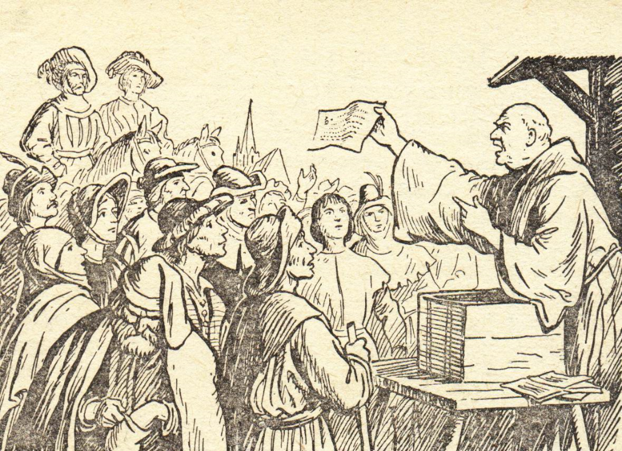
Due to the excessive concentration of attention on the need for good deeds for the multiplication of grace and on bringing moral satisfaction to the justice of God, medieval scholasticism developed the concept of an inexhaustible spiritual treasury of merits (thesaurus meritorum) accumulated in the Church on the basis of the saving feat of Christ by excessive, super-necessary success in the good Christian deeds of the Virgin, the righteous and the saints (opera supererogationis, merita superabundantia). Thanks to God’s mercy and by virtue of the ecclesiological principle of the mystical communion of all the faithful (communio sanctorum), the “reserve” of these merits can, at the will of the hierarchy, cover the infirmities of weaker church members by granting them indulgences (Latin indulgentia — “condescension, mercy”), i.e. indulgences regarding any canonical disciplinary forms. First of all, this has become relevant in connection with the teaching that, in accordance with divine justice, in order to be completely absolved of sin, in addition to confession, which absolves only from guilt, it is necessary to incur temporary punishments (poenae temporales) and perform works of reparation for offenses in order to restore the violated law and order. As a result of this artificial division of sin, repentance and punishment, the practice of indulgences provides for the possibility of full or partial discharge of the imposed debt by another person for a repentant sinner, including for the deceased, who did not have time to bring just satisfaction and therefore the soul is undergoing otherworldly purifying torments until final reconciliation with the Supreme Judge.
These ideas received their first official approval in the Roman Catholic Church in the bull of Pope Clement VI “Unigenitus Dei Filius” (1343), which also speaks about the privileged right and authority of pontiffs to grant indulgences, which was performed on special occasions and in established jubilee years: “The only begotten Son of God … wished that This treasure was taught to the faithful for their salvation by His vicars on earth, Blessed Peter, the keeper of the heavenly keys, and his successors.” The need to use indulgences as a “saving remedy” was confirmed in 1563. The Council of Trent. With the blessing of the Pope, bishops, legates, and representatives of monastic orders were allowed to distribute indulgences in that era. The issue was carried out by distributors (quaestors) in the form of letters for monetary donations or the fulfillment of special assignments (participation in a “sacred” military campaign, pilgrimage, etc.). With the introduction of the practice of acquiring indulgences for the sake of “shortening sentences”, penance gradually disappeared from the penitential discipline of Catholicism, as a pastoral and pedagogical measure aimed at correcting the spiritual- moral life. Numerous abuses also arose, for example, the use of indulgences as a substitute for the sacrament of Confession, i.e. as a means of automatic forgiveness of committed and even future sins according to the false permissive formula “a culpa et a poena” (from guilt and from punishment). Indulgences began to be understood as a kind of guarantee of salvation of the soul and liberation from the torments of hell.
After the Second Vatican Council, there were some changes in the doctrine of indulgences, in the order and conditions of their granting. The Constitution of Pope Paul VI “Indulgentiarum doctrina” (1967), the “Manual of Indulgences” (1968) and the new Code of Canon Law (1983) partially took into account both internal and external theological criticism. As a result, indulgences have not been abolished, they can also be given to the living and the dead, and they can be of a full or partial nature in terms of the amount of forgiveness of punishment for sins for which guilt was absolved in the sacrament of confession. However, now the Roman Catholic Church, when covering the topic of indulgences, focuses on personal spiritual efforts on the part of the recipient. The Roman Catholic Church also began to insist on the need for a sincere change in human thinking, his aversion from sin, and the right inner disposition in faith and love for God. In addition, current documents of the Roman Catholic Church mention the need for prayerful intercession for the dead and performing works of mercy to alleviate their fate.
Related Concepts
- 2-peter-14
- adoption
- afterlife-theology
- anselm-of-canterbury
- beatific-vision
- casuistry
- christ
- christ-as-true-god-and-true-man
- communion-of-saints
- concupiscence
- devil
- florence-union-document
- freedom
- good-works
- heaven
- hell
- holy-spirit
- human-nature
- image-and-likeness
- indwelling
- judgment
- justice
- latin-doctrine
- maximus-the-confessor
- merit
- mortal-and-venial-sin
- mortal-sin
- mystical-union
- obedience
- original-righteousness
- orthodox-critique
- papal-authority
- paradise
- penance
- positive-redemption
- prayer-for-the-dead
- purgatory
- revelation
- salvation
- satisfaction
- satisfaction-theory
- scholasticism
- supernatural
- temporal-punishment
- the-two-ways
- transcendence
- treasury-of-merits