Comparative Theology — Topic 1. Introduction.
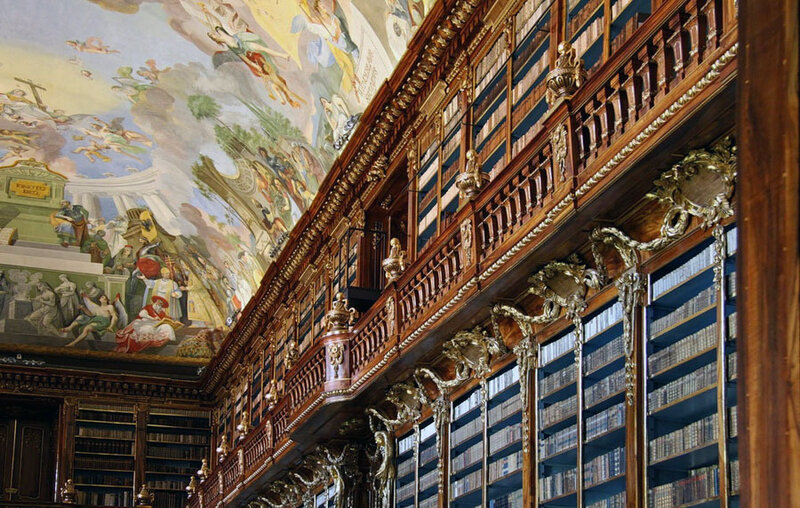 Comparative theology is a scholarly and educational theological
discipline that studies the dogmatic, canonical, and other essential features
of non-Orthodox confessions (Christian denominations that have, for various
reasons, lost unity with Orthodoxy) in comparison with the doctrinal tradition
and historical heritage of the Orthodox Church. At the present stage,
comparative theology primarily investigates the history and the most
significant characteristics of Roman Catholicism and the early branches of
Protestantism that separated from it. Additionally, the discipline includes
the study of the history and theology of the ecumenical
movement, which emerged in the early 20th century and seeks to establish
unity among various Christian denominations.
Comparative theology does not study non-Christian religions (e.g., Judaism, Islam, or paganism), this is the domain of religious studies. Ancient heresies (Gnosticism, Sabellianism, Arianism, etc.), ancient Eastern Christian confessions (e.g., Nestorianism, Monophysitism), as well as the concepts of individual theologians and religious thinkers of antiquity that developed, (depending on their perspective) the object of studies in dogmatic theology, patrology, or the history of the Ancient Church. Christian confessions of modern times (e.g., Baptism, Adventism, Pentecostalism, etc.) these are studied within the framework of the discipline “New Religious Movements”.
Thus, the object of study in comparative theology is the collective of early Western Christian confessions that have separated from Orthodoxy, along with their doctrinal, moral, organizational, and various other characteristics, etc. There are several areas of investigation in comparative theology. These include the Roman Catholic Church, “classical” Protestant confessions (Lutheranism, Reformed tradition or Calvinism, Anglicanism), as well as Old Catholicism and Methodism, which are historically linked to the aforementioned confessions, and the ecumenical movement.
Like any theological science, comparative theology is based on the Sacred Tradition of the Church, as recorded in canonical biblical texts, the decisions of Ecumenical and Local Councils, doctrinal, canonical, and liturgical writings of the holy fathers and Orthodox-Christian thinkers.
Over the long history of its existence, comparative theology has repeatedly changed its name. In Orthodox Church science. It was called “refuting”, “polemical (accusatory)” and even “negative” (Latin theologia elenchtica, controversa, antitetica). With Russian theological science, the goal of the discipline we study remained unchanged — to provide “a critical review of deviations … in the teaching and moralizing of non-Orthodox Christian societies of our time.”
To achieve this goal, it was necessary to involve several tasks, namely: to get acquainted with the religious and cultural origins of the theological tradition of Western Christianity; to get an idea of the main features of Western theology in comparison with the dogmatic teaching of the ancient Church; to understand the historical, social and spiritual origins of the theological errors of the Christian West, as well as the resulting consequences of the doctrinal errors committed by Western Christians.
All of the above is not done solely because of theoretical scientific interest or, worse, frivolous curiosity. Orthodox comparative theology seeks and suggests ways for Western Christians to restore unity with the true Church. Or as St. Gregory the Theologian wrote: “We are not seeking victory, but the return of the brothers, the separation from whom torments us.”
- Comparative theology as an academic and scientific discipline
- Overview of the history of the development of comparative theology
- The Orthodox Church’s relationship with non-Orthodox confessions
- Three ways of joining Orthodoxy
 As an independent theological discipline, comparative theology took
shape quite late and outside of Orthodoxy. Namely, in the Roman Catholic
Church, where “accusatory theology” appeared and initially developed in the
context of the legacy of the Council of Trent (1545-1563). The Council of
Trent became a manifestation of the so-called “counter-reformation”, that is,
the opposition of Catholics to the spread of
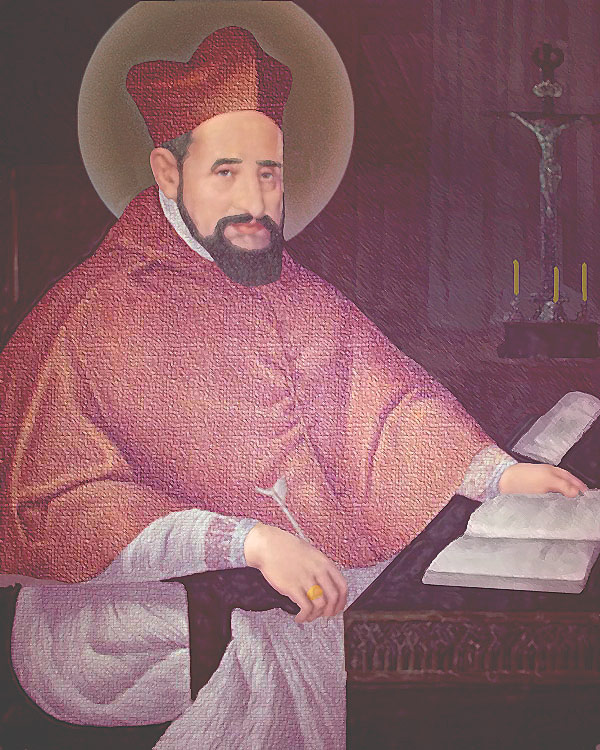
Protestantism. In 1576, on the initiative of Cardinal Roberto Bellarmine,
the Department of Polemical Theology was established at the Roman Collegium.
Catholic apologists, who were able to conduct reasoned discussions with
Protestant preachers were trained here. Based on the materials of lectures
given to collegiate students, Bellarmine compiled his main polemical work and
the first systematic work on comparative theology, “Reflections on Disputes
regarding the Christian Faith”, in which he proved the truth of Catholic
theology in the face of Protestant (primarily Lutheran and Calvinist)
confessions.
The rapid development of Catholic comparative theology took place during the entire period of the Counter-Reformation, which actually ended with the signing of the Peace of Westphalia (1648). This peace treaty not only put an end to the Thirty Years’ War in Europe, but also equalized the civil rights of Catholics and Protestants, reducing religion to the level of personal beliefs of a person. For several centuries, the writings on comparative theology compiled during the Counter-Reformation fully satisfied the needs of the Catholic Church in terms of criticism of Protestant and Orthodox creeds. And papist Rome, in the same manner, continued to treat non-Catholic Christians with wariness at best, but more often with hostility.
The tone has radically changed in a positive direction thanks to the decisions of the Second Vatican Council (1962-1965). With regard to non-Catholic Christians, Rome began the so-called “dialogue of love”, which was expressed, among other things, in the creation of mixed theological commissions for dialogue between the Roman Catholic Church and other faiths - not only with Orthodoxy, but also with Protestants of various denominations. As a result, the name and content of the discipline of comparative theology has changed in Catholicism. It is now called “ecumenical theology”. The name “comparative theology” is now used by Catholics as a synonym for comparative religious studies.
Protestant theology was initially characterized by a polemical tone. Almost all symbolic (i.e., confessional) books of “classical” Protestantism are works in the spirit of accusatory theology. Even the works that aimed to present the Reformation doctrine in a systematic way contained criticism of Catholics. These include, for example: The Great Catechism and the Schmalkalden Articles by Martin Luther, The Instruction in the Christian Faith by Jean Calvin, The Thirty-Nine Articles of the Anglican Creed, etc. More weighty and structured manuals on comparative theology appeared among European Protestants as a reaction, on the one hand, the activities of the Council of Trent, on the other — because of the desire to delineate the boundaries of their own confessions, separating one trend of Protestantism from others.
Such a theological confrontation continued until the 18th century, when polemical theology in Protestantism was replaced by the so-called comparative dogmatics or symbolism, which with some detachment studied the doctrinal texts of various Christian denominations in a comparative way. The further development of comparative theology in the “classical” Protestant environment was associated with historical sciences, while the polemical component, in fact, faded into the background. And in the twentieth century, the critical aspect completely lost its relevance, since the comparative theology of the Protestant denominations of the first generation of the Reformation finally turned into ecumenical theology.
The beginnings of teaching comparative theology in Orthodox educational institutions was associated with the appearance, in the 1st half of the XVII century, of the Kiev Collegium (the future Theological Academy) the first theological school with a systematic academic course in the Russian Church. Comparative theology was studied at the Kiev Collegium based on the works of its founder, St. Peter (Mogila).
The next stage in the development of Russian comparative theology was associated with the reforms of religious education in 1808-1814. Then our discipline became part of a general theological course in theological academies, which consisted (the course) of 7 sections: reading the Holy Scriptures, interpretive theology (Hermeneutica), contemplative (Dogmatica), active or moral (Practica), accusatory (Polemica), conversational (Homiletica) and governmental (Jus Canonicum). This structure existed until the reform of 1840, as a result of which comparative theology emerged as an independent discipline, originally called the “Doctrine of Faiths”.
Significant progress in teaching comparative theology in the middle of the 19th century was associated with the publication of a 4-volume Archim. Innokenty’s (Novgorodov) “Theology of accusation”. This course provides a thorough overview of not only the theological, but also the ceremonial features of Catholicism and Lutheranism, as well as Nestorian and Monophysite confessions. Sections devoted to the Reformation and Anglicanism, Archim. Innokenty did not have time to complete because of his sudden death. But despite the annoying gap, the textbook has received well-deserved recognition.
After the 1917 revolution, comparative theology in Russian developed mainly among emigrants. A great contribution to the development of our discipline was made by: Archbishop. Nathanael (Lvov), Archpriest G. Florovsky, Protopr. I. Meyendorff, Protopr. N. Afanasyev, Protopr. S. Bulgakov, V.N. Lossky, N.M. Zernov, N.A. Arsenyev, as well as St. Seraphim (Sobolev).
After the partial restoration of theological education in the USSR, distinctive schools of comparative theology emerged in the Moscow and Leningrad Theological Academies. The basic textbook on comparative theology for theological educational institutions of the Russian Orthodox Church was compiled in 1973 by Professor D.P. Ogitsky. This textbook, together with the work of an employee of the Publishing Department, G.F. Troitsky, formed the basis of the fundamental manual of Professor Archpriest Maxim Kozlov. Another important manual on comparative theology was the textbook of the associate professor of St. Tikhon’s Orthodox University for the Humanities, Archpriest V. Vasechko.
Representatives of other Local Orthodox Churches also had significant influence on the development of Orthodox comparative theology: Bishop Athanasius (Evtich), Mitr. Amphilochius (Radovich), Archim. Plakida (Desei), Mitr. Kallistos (Ware), Protopr. I. (Romanides). Current textbooks on comparative theology for the theological schools of Greece were written by Vasiliki Stafokosta, Nikos Matsukas, Athanasios Basdekis. For Romanian researchers of non-Orthodox subjects, the works of Archpriest D. Staniloae are still authoritative. In the Orthodox universities of the USA, comparative theology is studied, in particular, according to the textbook by A.S. Damik.
 The Orthodox doctrine is based on the assertion that the fullness of
saving grace resides only in the Orthodox Church. On the other hand, our
Church nevertheless recognizes a certain, sometimes mysterious, manifestation
of God’s good action outside of Orthodoxy. Throughout the 19th and 20th
centuries, there were debates in the Russian Church about the presence of
grace in Christian communities that do not have communion with Orthodoxy.
Russian Orthodox Church’s 2000 Bishops’ Council summed up the debate about the presence or absence of grace in non-Orthodox communities by adopting the document “Basic Principles of the Russian Orthodox Church’s Relationship to Non-Orthodoxy”, compiled under the leadership of Metropolitan Kirill (Gundyaev) (later Patriarch of Moscow and All Russia): “Communities that have fallen away from unity with Orthodoxy were never not considered as completely deprived of the grace of God. The rupture of church communion inevitably leads to damage to the life of grace, but not always to its complete disappearance in the separated communities. This is precisely the reason for the practice of admitting people from non-Orthodox communities to the Orthodox Church, not only through the Sacrament of Baptism. Despite the rupture of unity, there remains a certain incomplete communion, which serves as a guarantee of the possibility of returning to unity in the Church, to Catholic fullness and unity” (§ 1. 15).
Therefore, we cannot deny that the saving Divine influence manifests itself beyond the visible boundaries of the Church. But such an action is possible only for the reason that it (this action) has its origin in the true Church. In other words, we recognize that salvation is possible outside the Church only because the Church itself exists, since it is the only source of God’s grace in the world, which resides in it in fullness and can be poured out salvagingly, which, however, does not eliminate the need for Orthodox Christians to conduct a mission among the non-Orthodox.
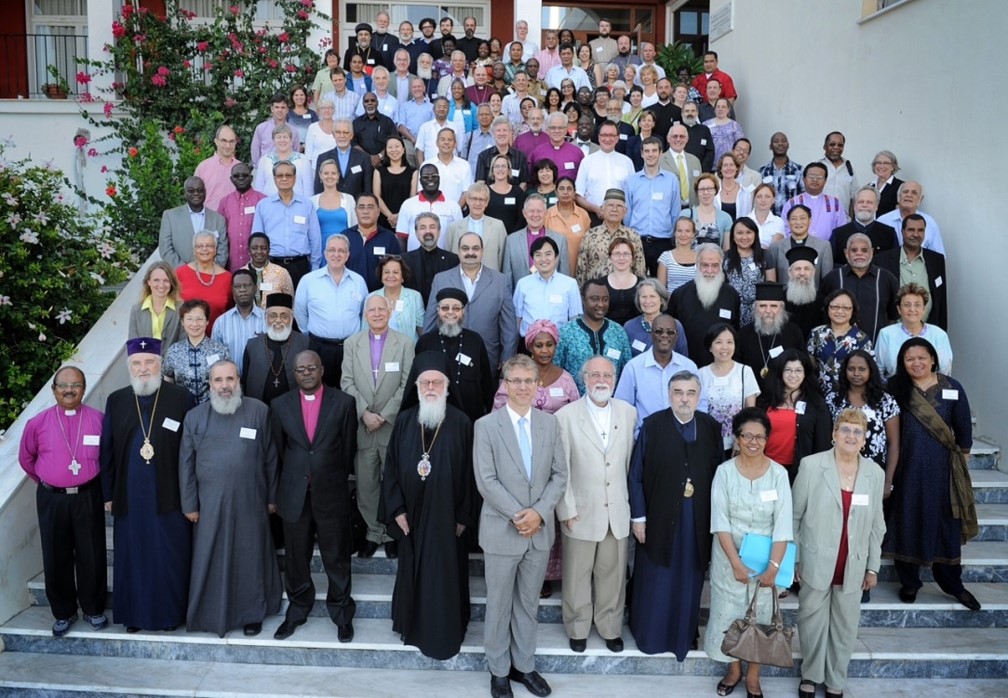
With regard to the World Council of Churches and other organizations whose official names include the word “church,” an Orthodox Christian may legitimately ask whether the word “church” can be used in relation to denominations that have fallen away from the unity of the Universal Church. Of course, the Church with a capital letter, the One Holy Catholic and Apostolic Church, which was founded by the Lord Jesus Christ and in which His true teaching remains uncluttered, is the only Orthodox Church.
When it is named: “Roman Catholic Church”, “Protestant Church”, “Mormon Church” - we write this word with a lowercase letter and use it as a self- designation of confessions. It is acceptable to use the word “church” in the proper sense in relation to communities that have preserved a historical hierarchy (ancient Eastern churches, the Roman Catholic Church). In relation to Protestantism, it is more correct to use the expression “Christian community” or “denomination” (confession), thereby correctly defining the essence of the various Protestant confessions that have voluntarily lost the apostolic succession of their ministers.
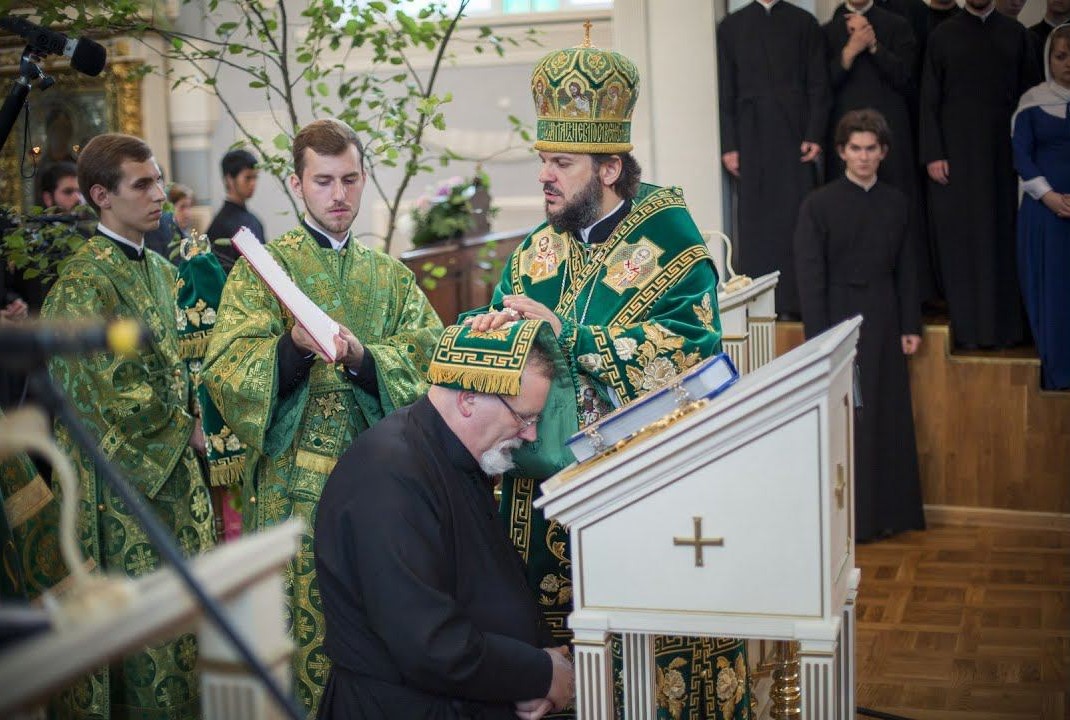 Currently, there are three ways (orders) for the joining of non-
Orthodox Christians with the Orthodox Church. They appeared in the fourth and
fifth centuries and were reflected in canonical tradition, in particular, in
Canon 95 of the Sixth Ecumenical Council. According to this decree, some
non–Orthodox Christians are accepted into Orthodoxy through the sacrament of
Baptism, others through Chrismation and, finally, others through Repentance.
Through baptism, representatives of religious movements who have retained only a very superficial connection with Christianity join the Orthodox Church. First of all, these are those who have distorted the teaching of the Holy Trinity so much that they (like, say, the Jehovah’s Witnesses) reject the trinity of God, or those who have completely distorted the teaching about the face of the Savior, or reject His Divinity, or falsely teach about His incarnation. In relation to some of these communities, it is quite possible to use the expression “pseudo-Christian denomination.”
Through chrismation, those non-Orthodox come into communion with the Orthodox Church whose communities, having lost unity with Orthodoxy, have preserved the dogmas of the Holy Trinity and the Incarnation of the Son of God intact, and have not distorted the text of Holy Scripture. At the same time, these confessions lost their apostolic succession in the hierarchy, including by voluntarily renouncing the sacrament of the Priesthood. This rank accepts Lutherans, Calvinists and other more or less traditional Protestants. Russian Old Believers are also accepted into Orthodoxy through chrismation.
Finally, through the sacrament of Penance, the non-Orthodox who have preserved the historical hierarchy and loyalty to the ancient Church doctrine join the Orthodox Church. As stated in the Message of the Holy Governing Synod of 1903: “We honor the apostolic succession of the Latin hierarchy and accept the clergy who come to our Church in their true dignity (just as we accept Armenians, Copts, Nestorians and others who have not lost their apostolic succession)”.
The form of ceremonial receptions has changed over the course of history, but at the same time, an important understanding underlying this practice has been preserved. Throughout the history of its existence, the Orthodox Church has refused to follow the “switch principle,” according to which the grace of God ceases to operate immediately beyond the borders of Orthodoxy. The Christian world, located outside the fence of the Orthodox Church, is a heterogeneous community consisting of confessions, some of which are extremely far from the apostolic Tradition, while others strive to at least partially adhere to it. Therefore, the attitude of Orthodoxy towards various non-Orthodox Christians manifests itself in different ways. Using the practice of the three rites, our Church testifies that the grace of God, which abides in fullness in Orthodoxy, at the same time works in a mysterious way and beyond the visible boundaries of the one, holy, catholic and apostolic Church. He does not act abstractly or in vain, but helps Christians separated from the true Church to find unity of faith and communion in the sacraments with the Church, which Orthodox Christians should do their best to promote by fulfilling the covenant of the Lord Jesus Christ.: “That they may all be one” (Jn. 17, 21).
Related Concepts
- 2000-bishops-council
- apologetics
- bishops
- canon-95
- christian-unity
- church-order
- comparative-dogmatics
- confessional-identity
- deacons
- dialogue-of-love
- diocesan-administration
- ecumenical-councils
- ecumenical-theology
- episcopacy
- episcopal-college
- episcopate
- historical-continuity
- history-of-the-orthodox-church
- matthew-parker
- matthias
- mission
- orthodox-anglican-dialogue
- orthodox-protestant-relations
- patristic-tradition
- patristics
- penance
- priesthood
- sacrament-of-priesthood
- sacramental-guarantee
- scripture
- second-vatican-council
- unity
- world-council-of-churches